Percussion welding · Since 1990 · ISO 9001
< 2 ms
weld time
131
lab-tested schedules
33
materials
1990
welding since
Speed
400 ms blink
Milliseconds weld
Four stages.
Over in milliseconds.
Two metals are loaded with their weld points brought to a pre-defined gap.
The process
Four stages. Over in milliseconds.
Gallery
See it up close
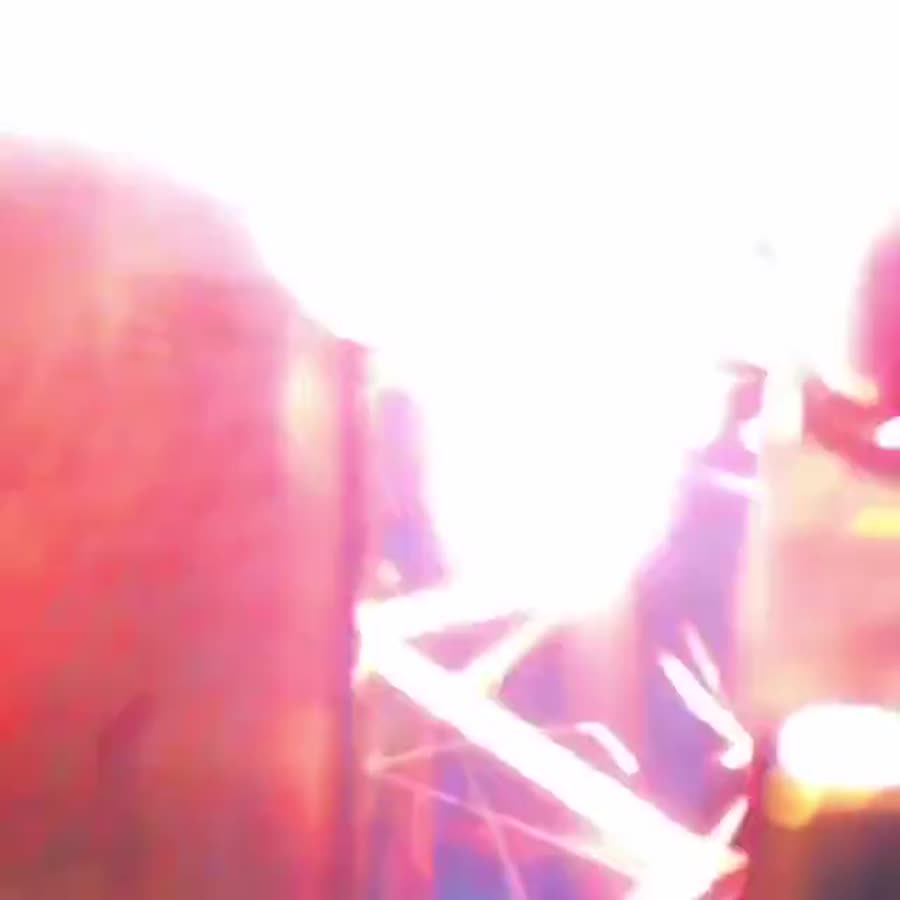
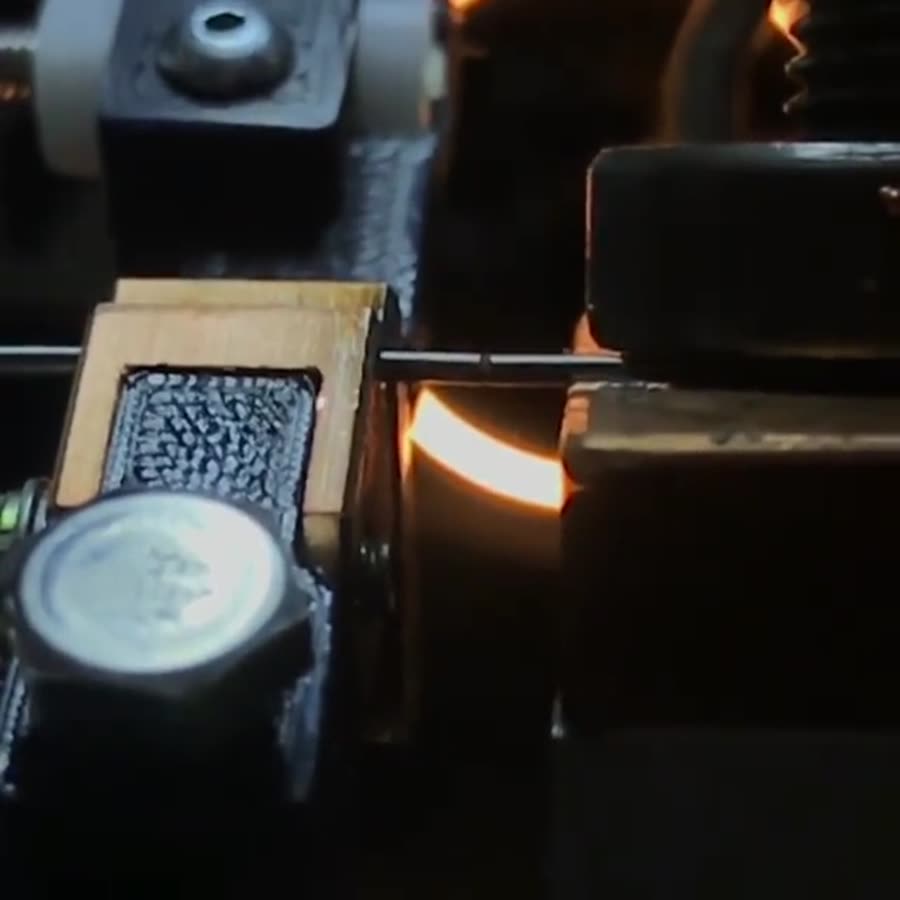
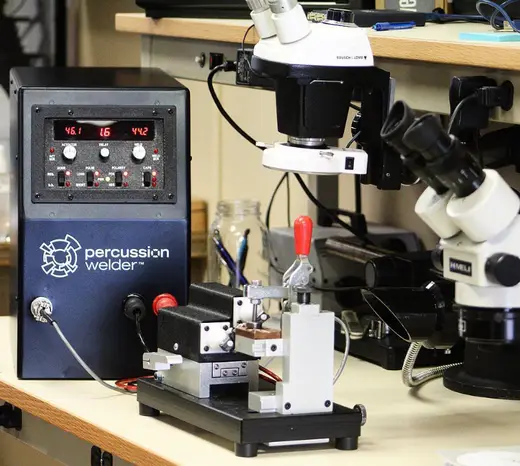
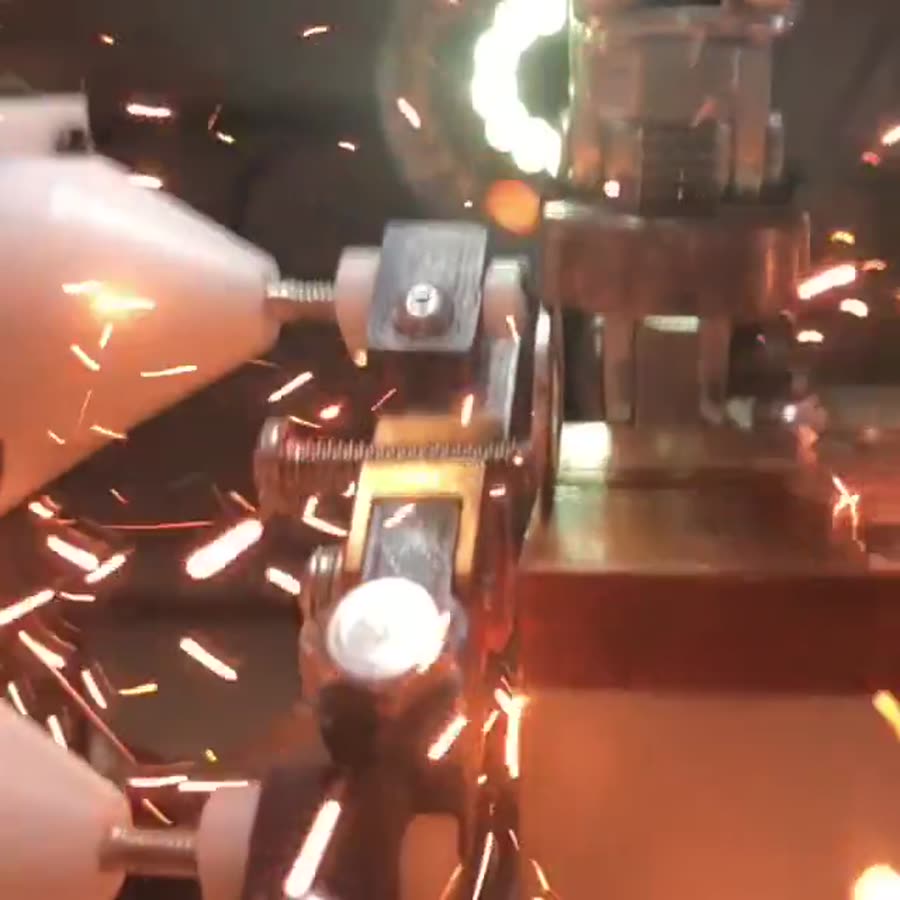
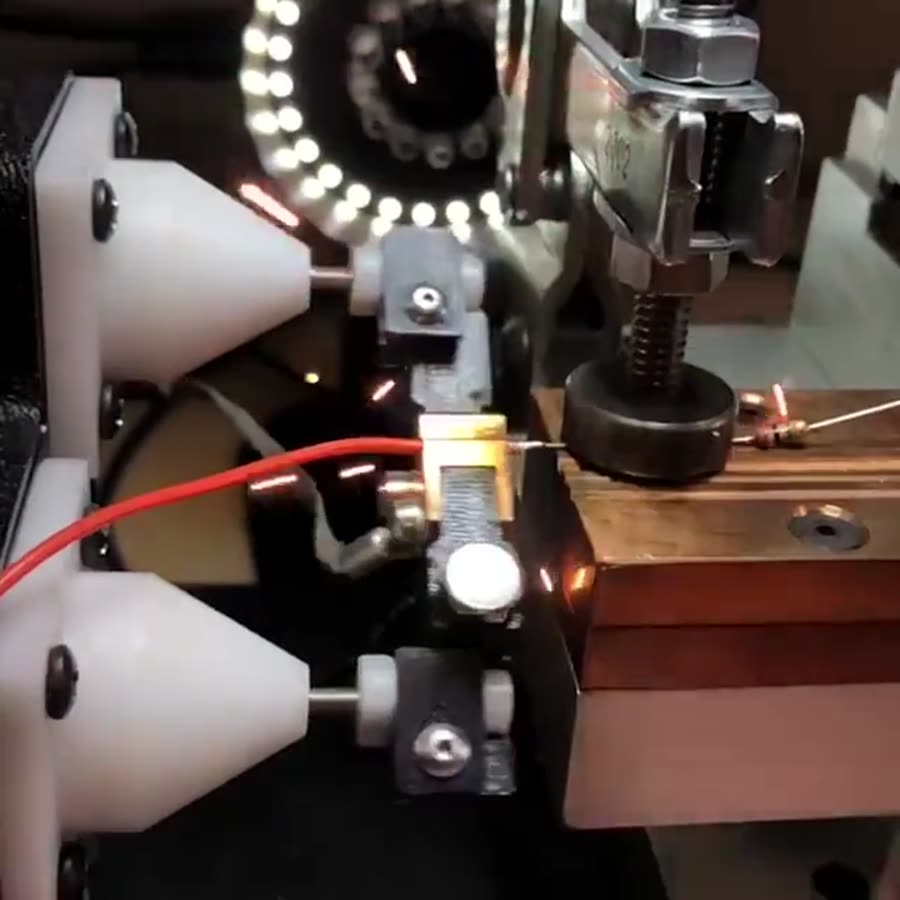
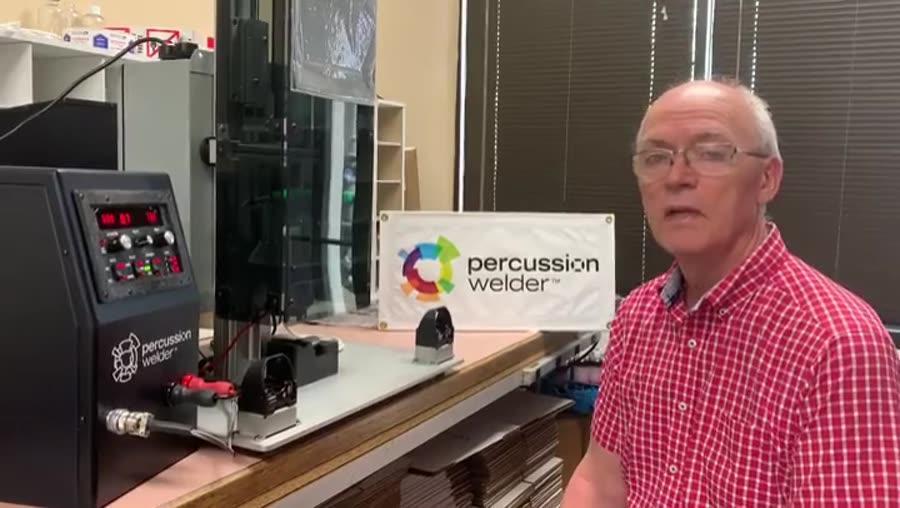
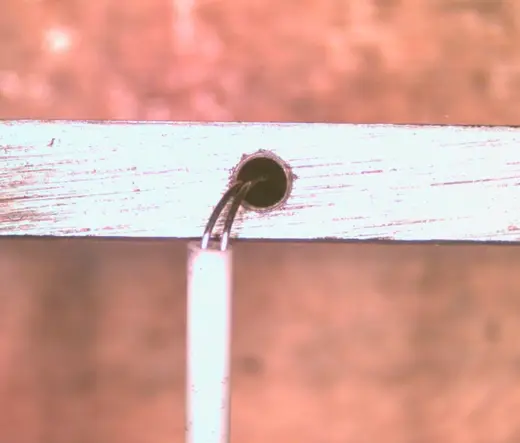
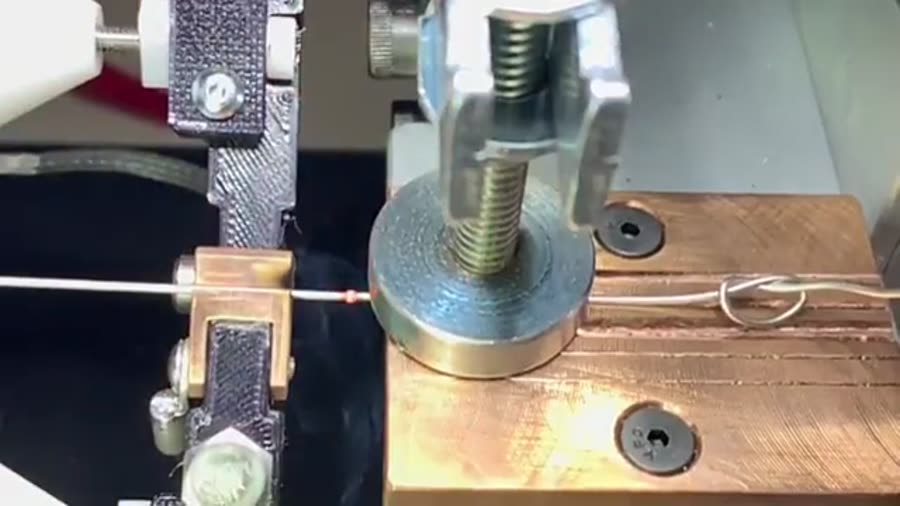
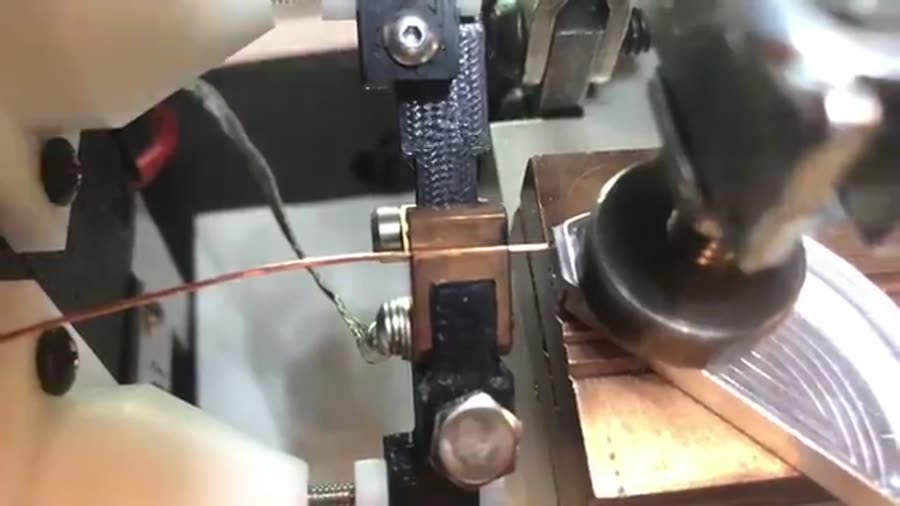
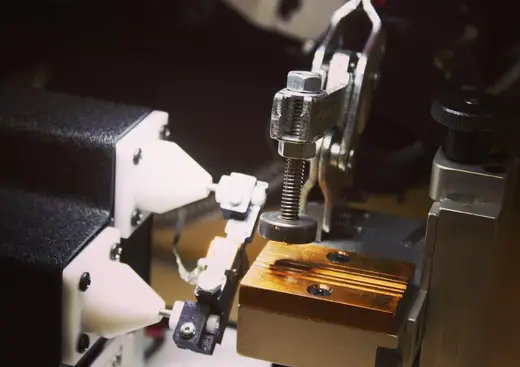
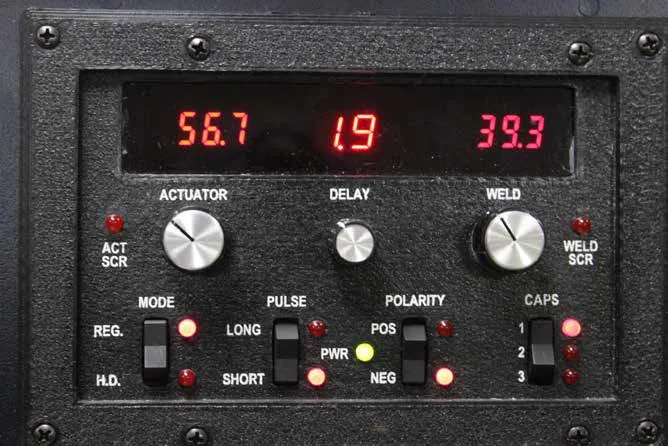
The 858 controller, the 726 bench fixture, the monitor software, and the welds they make. Hover to focus, click to enlarge.

Why it's different
Milliseconds
Start-to-finish weld
The entire forge-welding action is over in milliseconds. A blink takes about 400.
0
Consumables
No filler, no solder, no flux, and no electrodes to wear out.
≈ 0 Ω
Electrical resistance
A direct metal-to-metal bond with near-zero resistance across the joint.
HAZ
Minimal heat-affected zone
Arc heating lasts milliseconds, so nearby parts and material hardness are preserved.
Pull test
The wire breaks first
In pull tests the wire often breaks before the weld does. Resistant to shock and vibration.
131
Lab-tested schedules
Across 33 materials and 68 material pairs, ready to use as starting points.
Lab data
Every material pair we have tested
33 materials, 68 pairs, 131 lab schedules. Hover or tap a material to see what it has been welded to.
Explore
Copper, nickel, tungsten and aluminum have the most lab schedules. Select any material to light up the pairs it has been welded to.
Each line is at least one lab schedule. Schedules are starting points, not guarantees: validate on your own parts.
Free engineering tools
Parameter Finder
Pick two materials and a wire diameter. Get starting settings from our lab database.
Open tool →Data tableWeld schedules
All 131 lab-tested schedules. Search, sort, heat-map and download.
Open tool →CalculatorHAZ calculator
See how far heat can spread in your metal as heating time changes, from milliseconds to seconds.
Open tool →ChecklistFit checklist
Eight questions to see if percussion welding suits your joint.
Open tool →AssessmentProcess risk assessment
Seven sections, one score: how much risk is your current joining process carrying?
Open tool →CheckerCompatibility checker
Check basic welding compatibility for a material pair.
Open tool →Industries
- 01MedicalPrecision micro welding for small, intricate medical device components.Explore
- 02AerospaceMicro welds for components that matter to an aircraft's performance.Explore
- 03DefenseRobust joins of dissimilar metals where reliability is non-negotiable.Explore
- 04AutomotiveJoint strength and reliability for components like light bulbs and sensors.Explore
- 05ElectronicsReliable components such as sensors and lighting systems.Explore
- 06BatteryCopper, nickel and aluminum tabs, joined with no filler.Explore
- 07ThermocoupleTypes K, J, T, E, N, R, S and B thermocouple wire, welded with no filler.Explore
- 08Heater elementsJoining heater element materials without solder, filler or flux.Explore
- 09LightingLamp and lighting components, joined without solder or flux.Explore
- 10ActuatorsThe actuator behind the rapid motion of the bench fixture.Explore
The system
858
Percussion Welder
Provides the energy and controls for making the percussion weld.
Details →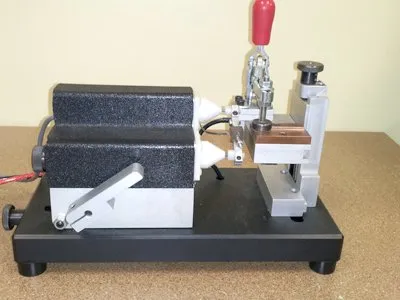
726
Bench Fixture
Holds the weld materials, provides the alignment mechanism, and applies the rapid motion that forges them together.
Details →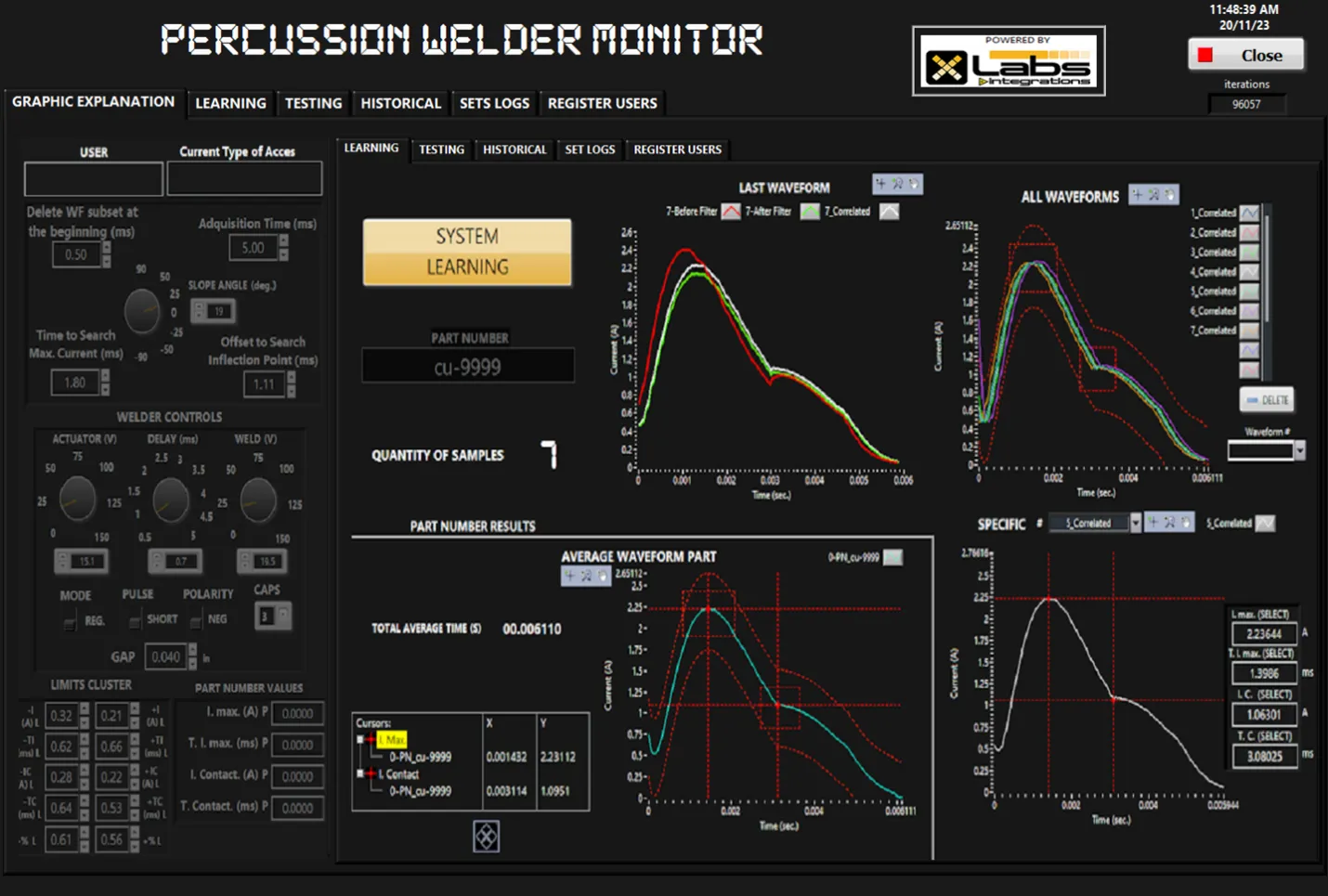
Monitor
Percussion Weld Monitor
Optional. Identifies good / no-good welds for process development and production monitoring.
Details →On the bench
How the Percussion Welder helps you weld dissimilar materials, with a demonstration at the bench. Copper, nickel and aluminum are shown.
FAQ
What is percussion welding?
A heat-plus-impact process for joining metals.
An electric arc supplies the heat, then a rapid mechanical movement forces the two materials together, forming a full metallic bond with no filler.
How fast is a percussion weld?
Milliseconds, start to finish.
A human blink takes about 400 ms. The arc itself heats the parts for only a few milliseconds, which is why the heat-affected zone stays minimal.
Which metals can it join?
Dissimilar combinations are the specialty — aluminum, brass, copper, steel, titanium and many more.
Our lab database holds 131 tested weld schedules across 33 materials and 68 material pairs. Don't see yours? Send samples and we will develop and verify a schedule. Free applications tests are available.
Do I need filler metal, solder or flux?
No. There's no filler, solder or flux, and no electrodes to wear out.
That means cleaner joints, less waste, and no consumables to buy.
Is it possible to automate the Percussion Welder process?
Absolutely.
Percussion Welder can use the same materials-handling systems other micro-welders use to transport and place small components. Give us a call — we can share many examples where it was successfully automated.
How can I become proficient in using the Percussion Welder?
It's easy to learn and intuitive to operate.
We also offer training courses tailored to your specific applications — only what you'll actually use, so you're successful now and in the future.
Still have a question? Tell us your weld challenge and an engineer will reply.
Start here
Share what you're joining and what's going wrong. We'll tell you straight whether percussion welding is a fit.
Prefer to talk? Book a demo or call 303-536-7838