
Equipment
0.90 in
stroke
0-33 in/s
speed across the operating voltage range
5.07 in
overall length
2 ohms
coil resistance
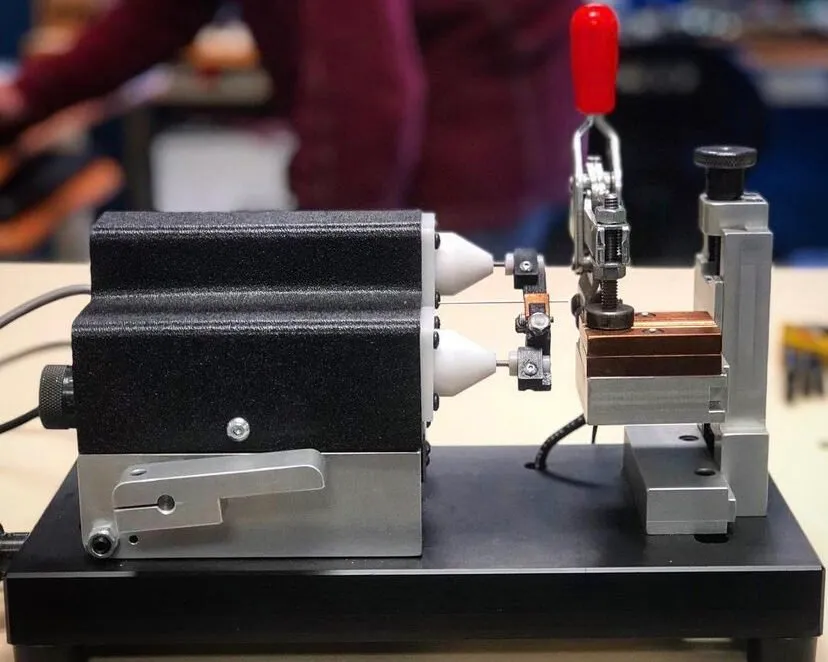
The system
One system, three parts
The 858 supplies the energy and controls. The 726 holds the parts and makes the rapid motion. The monitor, optional, checks the weld.
858 Percussion Welder
Provides the energy and controls for making the percussion weld.
Details →726 Bench Fixture
Holds the weld materials, provides the alignment mechanism and applies the rapid motion.
Details →Percussion Weld Monitor
Optional. A tool for process development and production monitoring, with automated good/no-good checking.
Details →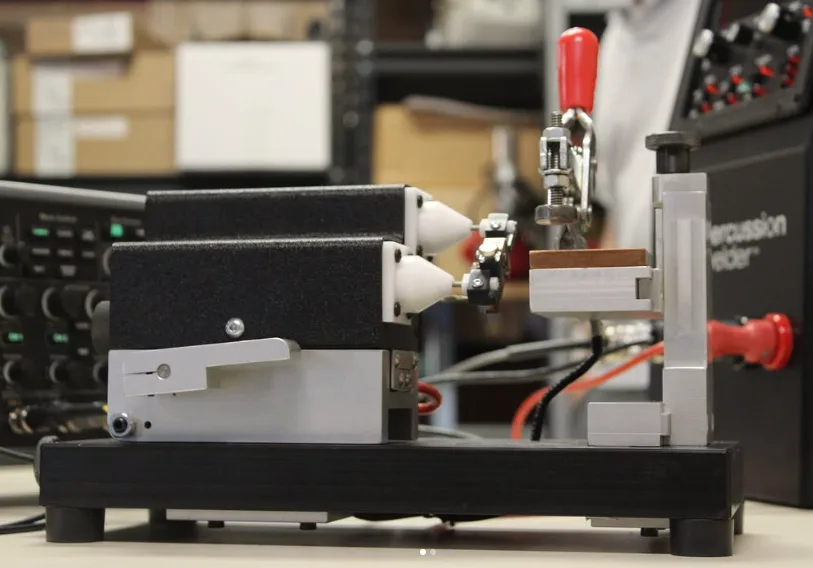 726 bench fixture, side view
Chapter 01 / 07
What the Model 808 Actuator is
The Model 808 Percussion Welder Actuator is a solenoid designed specifically for percussion welding. The mass of its moving parts is low, which allows rapid acceleration of the weldment held in the moving wireholder.
It is a working part of the motion side of the weld: the 858 supplies the operating voltage, the actuator turns it into movement, and the 726 Bench Fixture holds and aligns the parts so that the movement lands where you set it. It is designed to join dissimilar metals in accurate micro welds with no filler material.
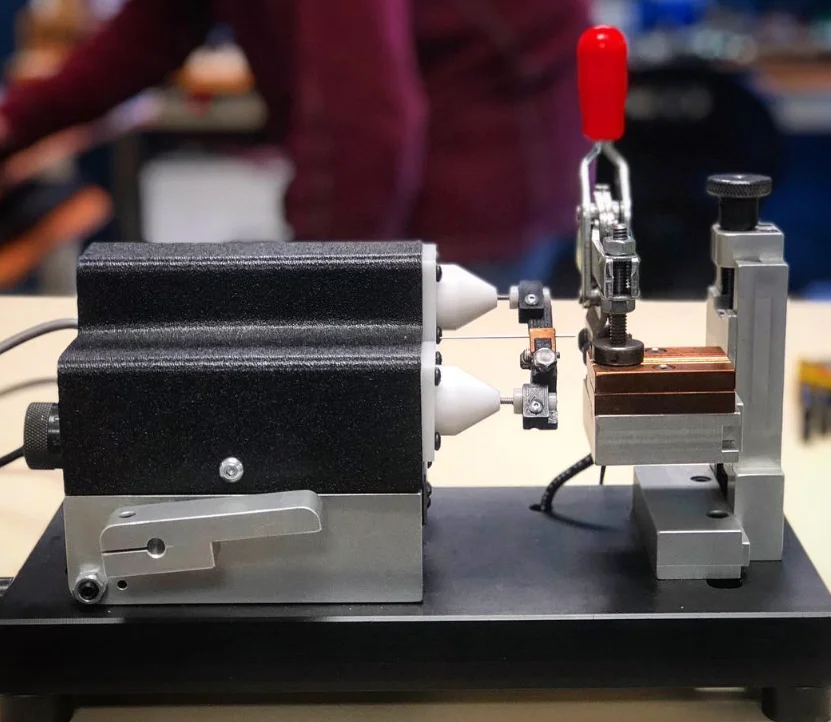 The 726 bench fixture
Chapter 02 / 07
Why acceleration matters
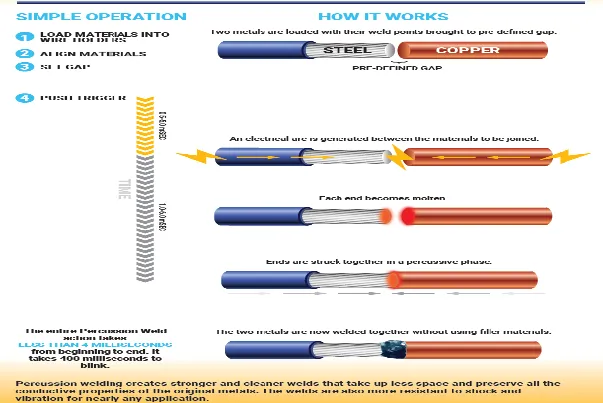
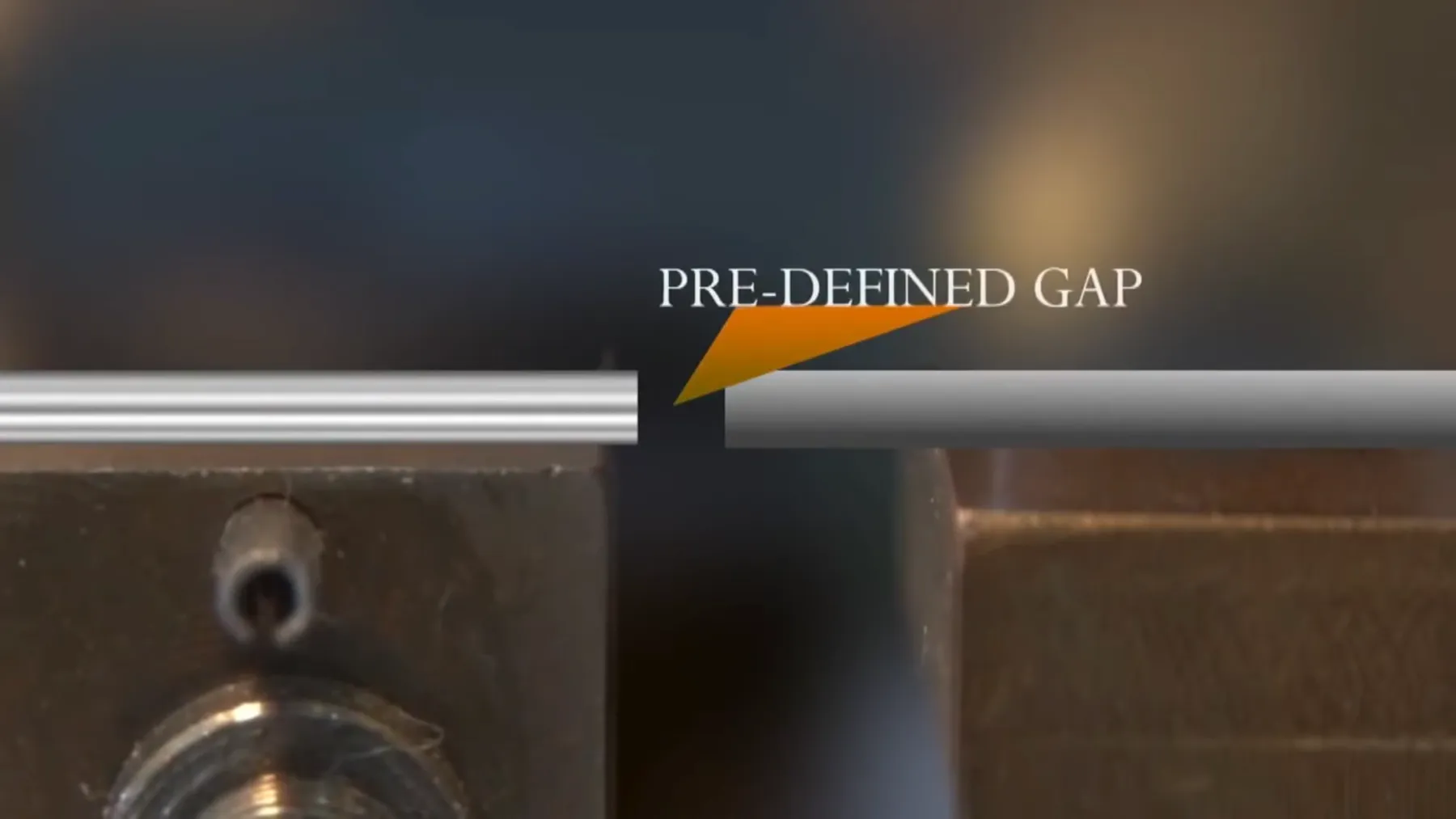
A percussion weld happens in four stages: the parts are loaded to a pre-defined gap, an arc is struck, the molten surfaces are thrust together, and the joint is bonded within milliseconds. The actuator provides the movement that closes the gap.
How the parts arrive matters. Rapid acceleration is what produces a clean, strong weld joint at the instant the two metals come into contact, and the 808 delivers consistent acceleration for a given setting. That consistency is what makes the process repeatable, and repeatability is what makes it usable in production. Low moving mass helps because there is less to accelerate.
Want to see it on your parts?
Send samples and we'll run test welds before you commit.
Gallery
The motion behind the weld
The actuator end of the fixture and the system around it.

Chapter 03 / 07
Specifications
The Model 808 is a solenoid with low-mass moving parts, built for percussion welding. These are its dimensions and ratings. The operating voltage comes from the 858, so there is no separate power supply for the actuator.
| Overall length | 5.07 in |
|---|---|
| Mounting plate | 1.38 in x 1.38 in |
| Stroke | 0.90 in |
| Coil resistance | 2 ohms |
| Speed | 0 to 33 in/s across the operating voltage range |
| Operating voltage | Provided by the 858 Percussion Welder |
| Type | Solenoid, low-mass moving parts |
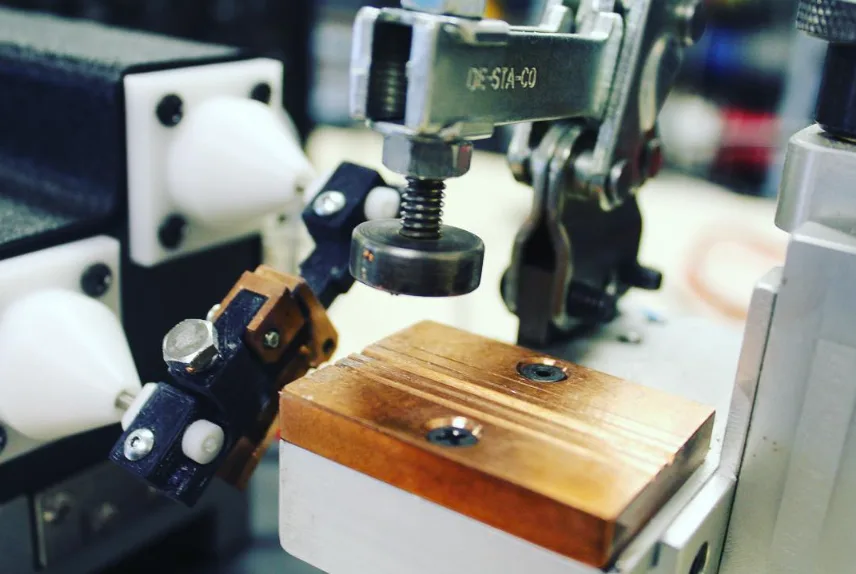 The 726 fixture up close
Chapter 04 / 07
How the 858 drives the actuator
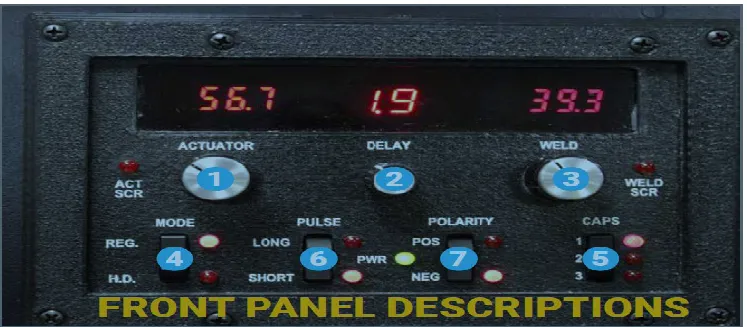
The 858 has a dial on its front panel for the actuator, next to the delay and weld energy voltage dials. The actuator setting controls how hard the actuator is driven, and so how fast the moving weldment travels, up to the actuator speed of 0 to 33 in/s listed for the 858.
The actuator is set separately from the weld energy, so you can change the speed of the approach without changing the energy of the arc. The 858 also has switches for mode (regular or heavy duty), pulse (long or short), polarity and capacitance. See the 858 page for the full control list.
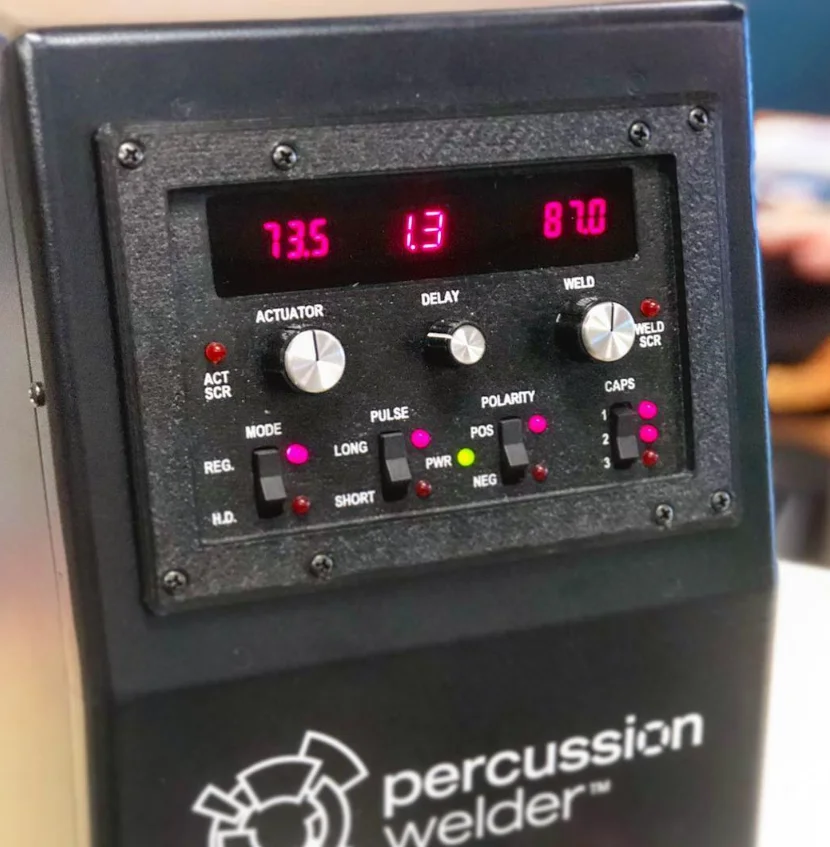 The 858 front panel
Chapter 05 / 07
Where the actuator sits in the system
In the Percussion Welder system the actuator moves the moveable wireholder in the 726 Bench Fixture. The stationary workpiece holder stays still, so the moving weldment is thrust into the stationary one when the weld is triggered.
That is why actuator behavior and fixture setup go together. The gap you set with the fixture’s gap adjustment knob, the alignment of the two parts and the speed of the actuator all decide how the parts meet. If a weld is inconsistent, check the alignment and gap first, then the actuator setting. Change one thing at a time.
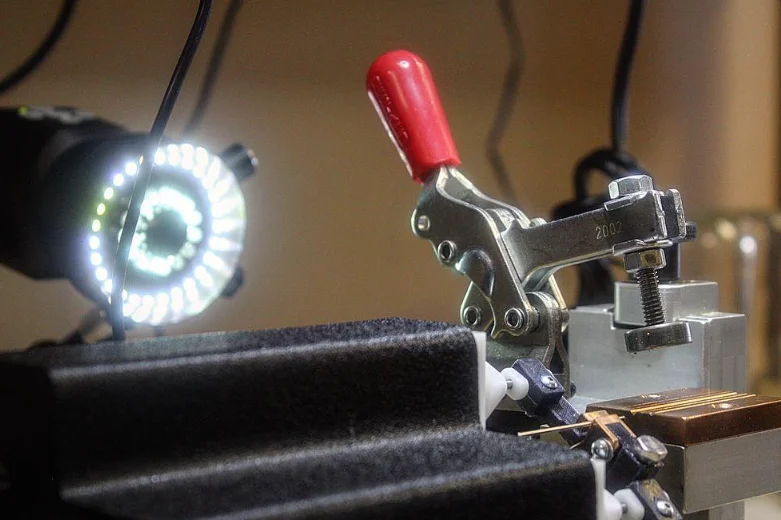 The fixture under the ring light
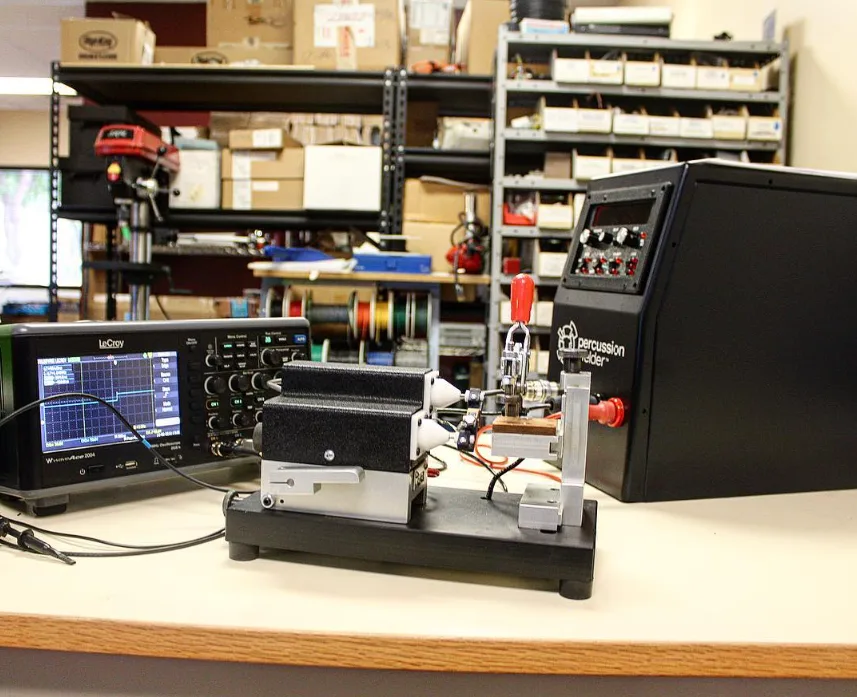 858, 726 fixture and oscilloscope on the bench
Want to see it on your parts?
Send samples and we'll run test welds before you commit.
Chapter 06 / 07
Setting actuator speed for your parts
Every one of the 131 lab-tested weld schedules on this site records an actuator setting, along with the wire diameter, delay time, capacitance, weld voltage and pulse. The actuator setting differs from one material pair to the next, which is why there is no single correct value.
Look up your pair in the weld schedules or the Parameter Finder, use the row as a starting point, and adjust one setting at a time. The schedules are starting points, not guarantees, and every application should be validated on your own parts. If your pair is not in our data, ask for a free applications test.
Chapter 07 / 07
Maintenance and service
The 808 is designed to be easy to use and maintain, with a simple design and low maintenance requirements. It is part of the equipment we design and build in Denver, and MTI MicroWelding’s ISO 9001:2015 certified scope includes the design, manufacturing, sales, distribution and servicing of percussion welding equipment.
For questions about your actuator, call 303-536-7838 or email sales@percussionwelder.com.
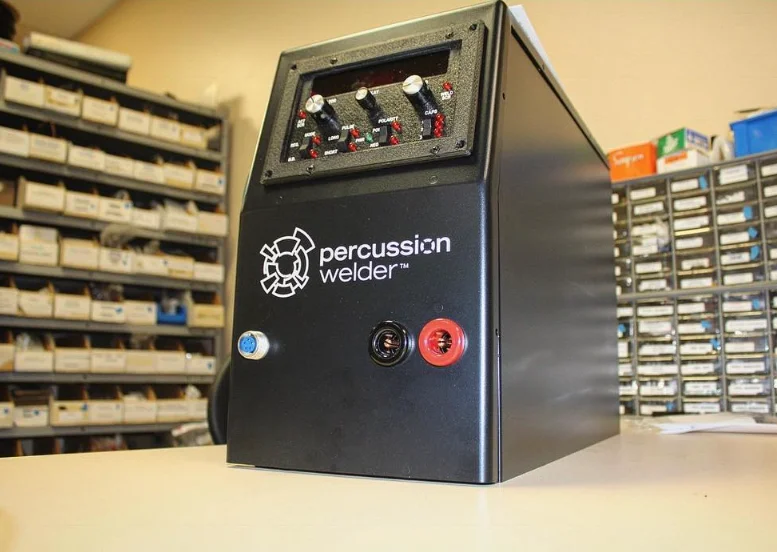 858 front panel and output jacks
Where to next
726 Bench Fixture
The Model 726 Bench Fixture is the weld head of the Percussion Welder system: it holds, aligns and thrusts small parts together, with the 858 and 808.
Open →858 Percussion Welder
The Model 858 is a capacitor discharge micro welder for thermocouple wire, fine wire and dissimilar metals. No filler, minimal HAZ. Call 303-536-7838.
Open →Weld schedules
Open →Products
The percussion welding system from MTI MicroWelding: the 858 Percussion Welder, 726 Bench Fixture, 808 Actuator and optional Percussion Weld Monitor.
Open →FAQ
What is the Model 808 Actuator?
A solenoid designed specifically for percussion welding. Its moving parts have low mass, so the weldment held in the moving wireholder accelerates rapidly.
Why does acceleration matter?
Rapid acceleration is what produces a clean, strong weld joint at the instant the two metals make contact. Consistent acceleration gives a consistent, repeatable welding process.
What are the 808's key dimensions and ratings?
Overall length 5.07 in, mounting plate 1.38 in x 1.38 in, stroke 0.90 in, coil resistance 2 ohms, and speed from 0 to 33 in/s across its operating voltage range.
What drives the actuator?
The operating voltage is provided by the 858 Percussion Welder, which has a dial on its front panel for the actuator.
How much maintenance does it need?
The 808 is designed to be easy to use and maintain, with a simple design and low maintenance requirements.
How do I choose an actuator setting for my materials?
Start from a lab schedule for your material pair, if one exists, and adjust one setting at a time while checking the weld. Schedules are starting points, not guarantees. We can also run a free applications test on your materials.
Still have a question? Tell us your weld challenge and an engineer will reply.
Start here
Call 303-536-7838 and we will walk through actuator speed and fixture setup for your parts.
Prefer to talk? Book a demo or call 303-536-7838