
Battery
7 settings
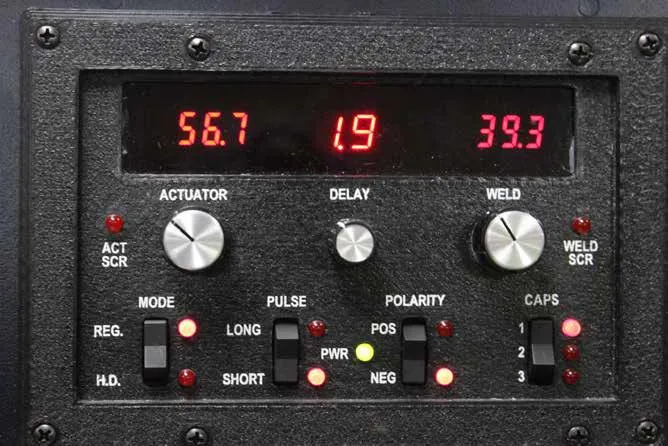
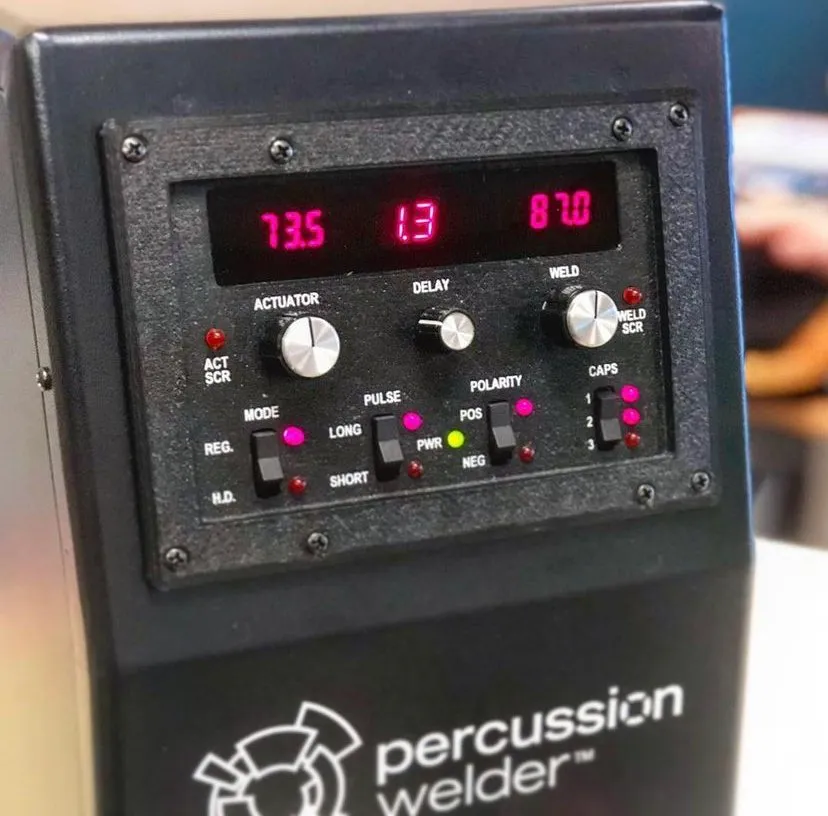
adjustable: actuator, delay, energy, mode, pulse width, polarity, capacitance
No filler
heat and pressure bond
Automatable
integrates with production lines
Dissimilar
metals and fine wires
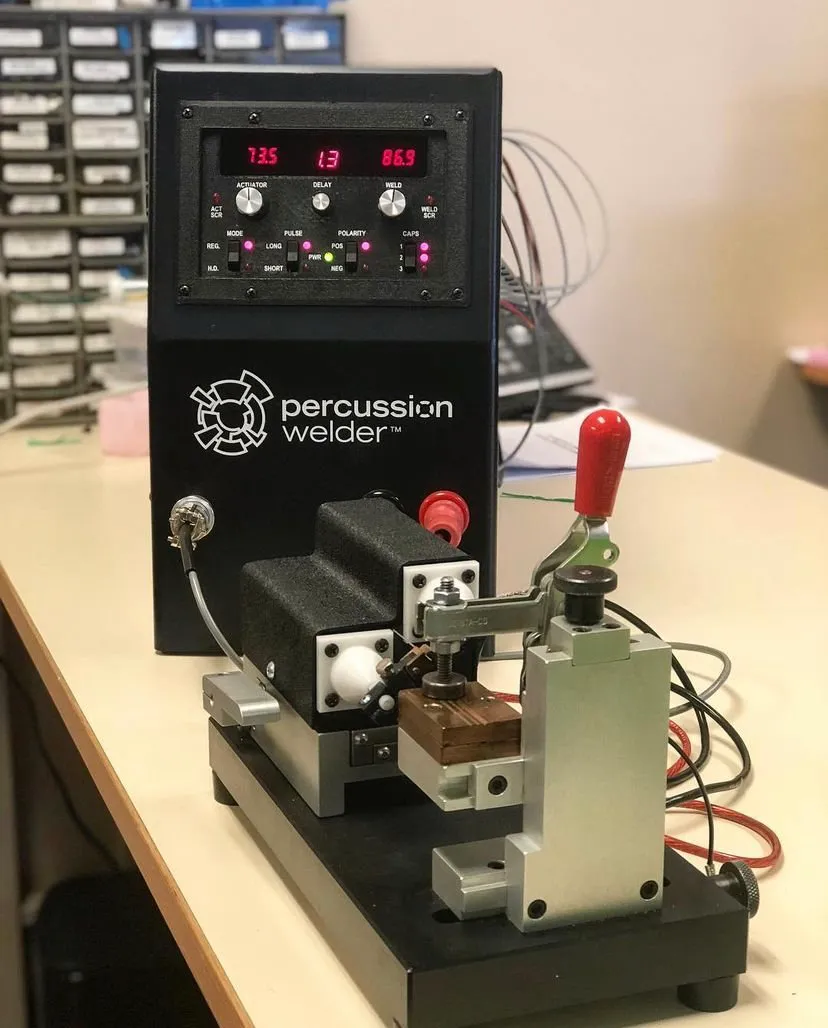
The Percussion Welder can be used in automation and semi-automation. Collin at the bench.
Lab data
Battery metals: what we have tested
The metals used in battery tabs and interconnects, and how many lab schedules join each pair.
Explore
Hover or tap a cell to see how many lab schedules we have for that pair, and open the starting settings.
Counts are lab weld schedules (starting points, not guarantees). A zero means no published schedule yet, not that the pair cannot be welded.
Chapter 01 / 05
Battery Welding Solutions with Percussion Welder
Percussion Welder provides precise, strong welds for battery pack assembly and battery tab welding. It can be integrated with automated systems for high-volume production.
Chapter 02 / 05
Battery Welding Process
Many industries rely on batteries, with the need to weld various metals to build cells and to fuse together to connect batteries, wires, and components. Percussion Welder offers a solution for battery pack assembly welding and battery tab welding.
Percussion welding joins dissimilar materials and fine wires with a minimal heat-affected zone.

Want to see it on your parts?
Send samples and we'll run test welds before you commit.
Gallery
Equipment and sample welds
Lab equipment and weld samples.

Chapter 03 / 05
Battery Welding Applications
Our Percussion Welder system offers solutions that address the specific concerns of the automotive industry when it comes to welding batteries, sensors, light bulbs, and other electronic parts and components found in all types of vehicles.
Our battery tab welding system and percussion welding process allow for high-volume welding without compromising weld quality or strength. Our Percussion Welder system can be fully integrated with automated systems, ensuring manufacturing rates are maintained even in a high production battery manufacturing process.
Percussion welding uses both heat and pressure to create welds for battery components. A small gap between the two parts allows the generation of an electrical arc that melts the materials, with percussion rapidly pushing the molten materials together for a precise, complete, and filler-free bond. It can be adjusted to meet your specific production requirements.
To discuss the use of our Percussion Welder system for your battery pack manufacturer needs, send us a message online or call us today at 303-536-7838.
Chapter 04 / 05
Dissimilar Metals and Automated Lines
Our system combines heat and pressure to create precise welds without the need for filler materials. It is designed for joining dissimilar metals, including in battery manufacturing.
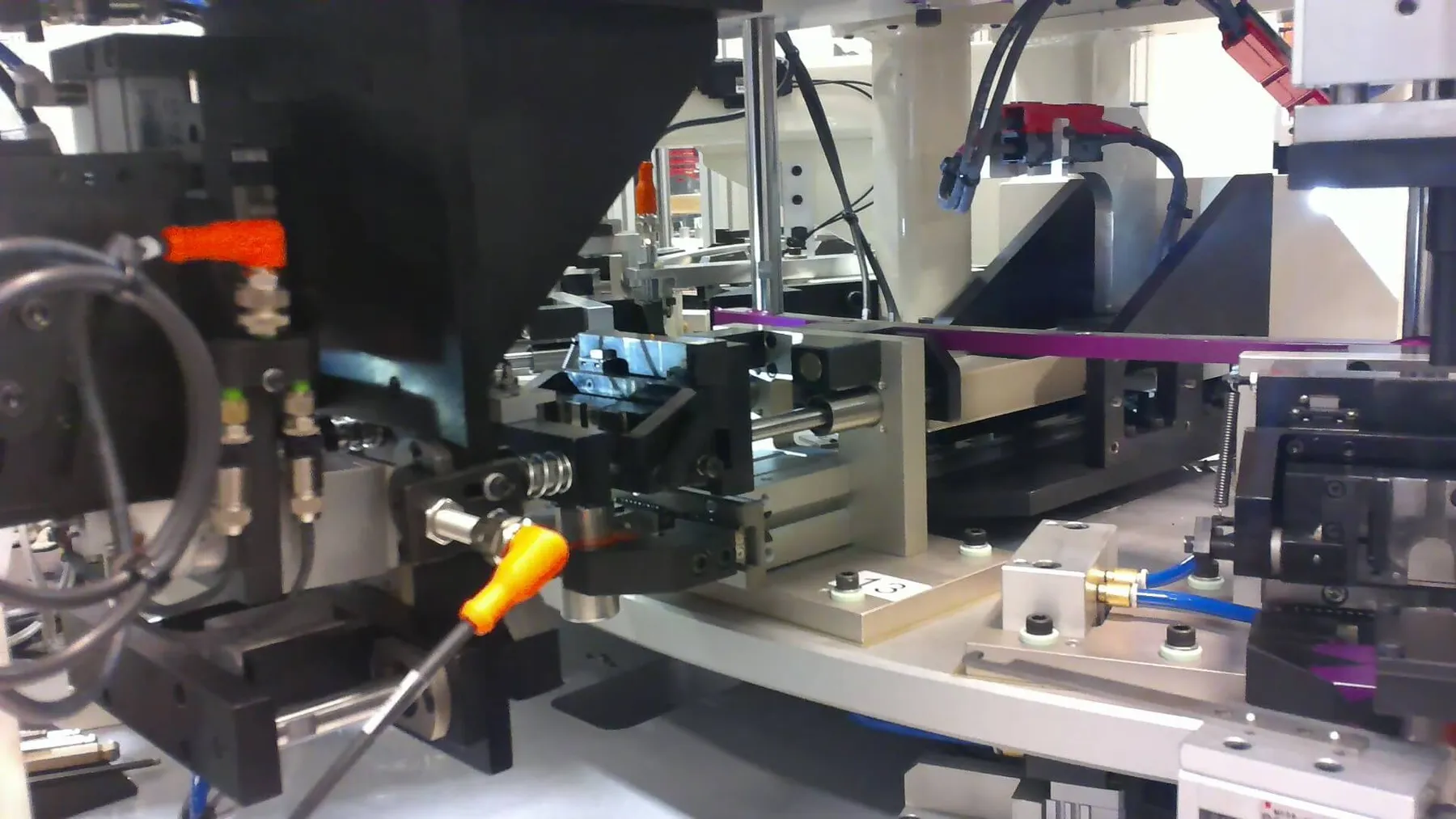
Our Percussion Welder system can be fully integrated with automated production lines, allowing for high-volume manufacturing without sacrificing quality. The ability to customize settings such as actuator control, delay, weld energy, mode, pulse width, polarity, and capacitance lets you tune each weld to the application.
Chapter 05 / 05
Percussion Welding for Battery Production
High Precision and Strength
Percussion welding produces precise, strong welds for battery components.
Efficient and High-Volume Production
Our welding system supports high-volume production without compromising on weld quality, making it ideal for large-scale battery manufacturing.
Integration with Automated Systems
Fully compatible with automated systems, our Percussion Welder system enhances production efficiency and consistency.
Customizable Solutions
We offer tailored solutions to meet specific production requirements.

Where to next
Battery Tab Welding with Percussion Welding
Tab welding for batteries: percussion welding joins copper, nickel and aluminum tabs with no filler and a minimal heat-affected zone. Lab schedules and a free test.
Open →Battery Tab Welding: Percussion vs. Spot Welding
Percussion vs. resistance spot welding for battery tabs: HAZ, cycle time, dissimilar metal capability, and electrode wear compared. Which method for copper-nickel and aluminum tabs?
Open →FAQ
What battery work does this cover?
Battery pack assembly and battery tab welding, including welding cells together and connecting batteries, wires and components.
How is the weld made?
A small gap between two parts allows an electrical arc that melts the materials. Percussion then pushes the molten material together for a complete, filler-free bond.
What can be adjusted?
Actuator control, delay, weld energy, mode, pulse width, polarity and capacitance, so each weld can match your specification.
What problems does it address?
Battery welding involves joining dissimilar materials and making the fine welds that wires require. Percussion welding joins dissimilar materials and fine wires with a minimal heat-affected zone.
Can it run on an automated line?
Yes. It can be fully integrated with automated systems for high-volume production without compromising weld quality or strength.
Which tab materials and thicknesses work?
That depends on your tab and cell. Our lab database holds 131 weld schedules across 33 materials and 68 pairs, which are starting points rather than guarantees. Send us your tab and cell material and thickness, or call 303-536-7838, and we'll run a trial weld.
Still have a question? Tell us your weld challenge and an engineer will reply.
Start here
Send the tab material, thickness and cell format, and we will run a trial weld in Denver.
Prefer to talk? Book a demo or call 303-536-7838