
Applications
Milliseconds
to make a weld
0
solder, flux or filler needed
131
lab-tested weld schedules
Since 1990
welding solutions
Lab data
Every material pair we have tested
33 materials, 68 pairs, 131 lab schedules. Hover or tap a material to see what it has been welded to.
Explore
Copper, nickel, tungsten and aluminum have the most lab schedules. Select any material to light up the pairs it has been welded to.
Each line is at least one lab schedule. Schedules are starting points, not guarantees: validate on your own parts.
Chapter 01 / 08
What percussion welding does
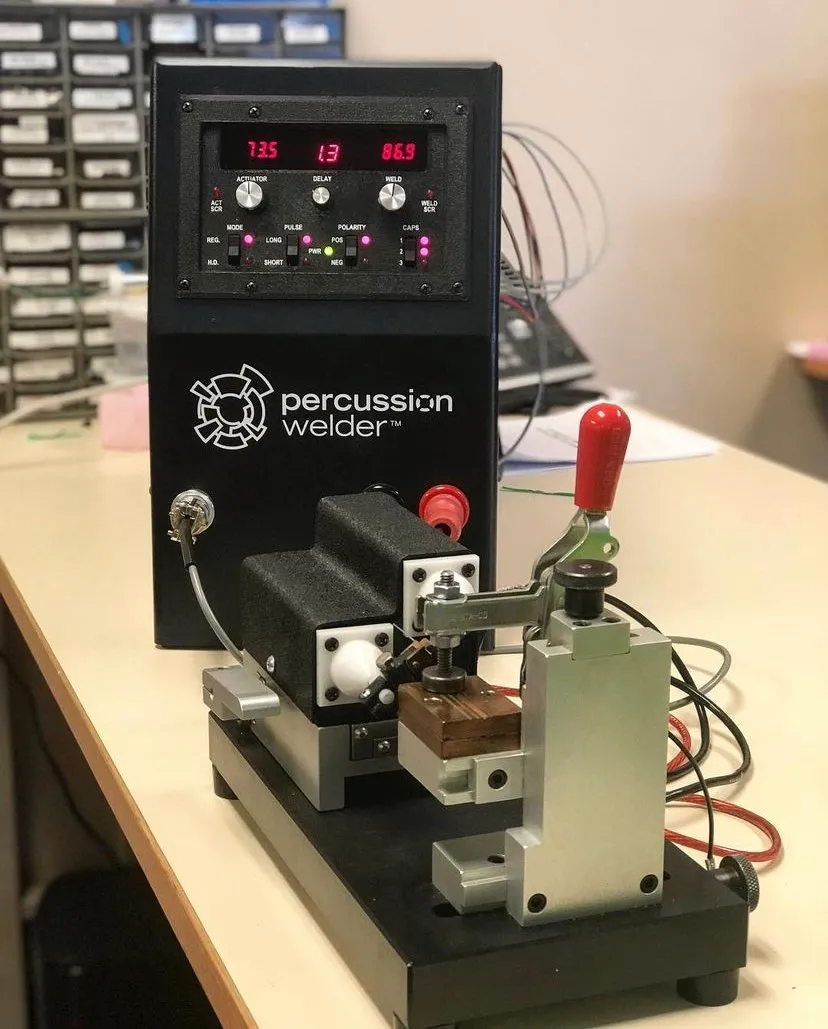
Percussion Welder provides micro-welding solutions for many industries. It joins small metal parts, including dissimilar metals, intricate components and parts made in high volume, and it can be adapted to your application.
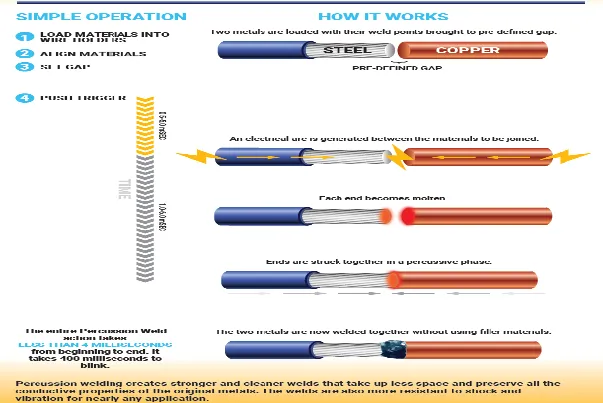
The weld is a capacitor-discharge arc between two parts brought to a pre-set gap. The surfaces melt, the parts are driven together and they bond within milliseconds, with minimal heat effect and no solder, filler or flux. How it works explains the four stages.
Chapter 02 / 08
Automotive and battery assemblies
One of the biggest micro-weld challenges in battery design and manufacturing is the need to join dissimilar metals. This often results in design modifications and inefficient workarounds that affect design integrity and battery performance. Percussion Welder joins dissimilar metals without any filler materials.
Battery tabs and interconnects join copper, nickel and aluminum, by hand or in automation and semi-automation. Sensors and light bulbs are other automotive components welded this way. Ask us about your specific requirement. See automotive and battery welding.
Want to see it on your parts?
Send samples and we'll run test welds before you commit.
Gallery
Joints from the application areas
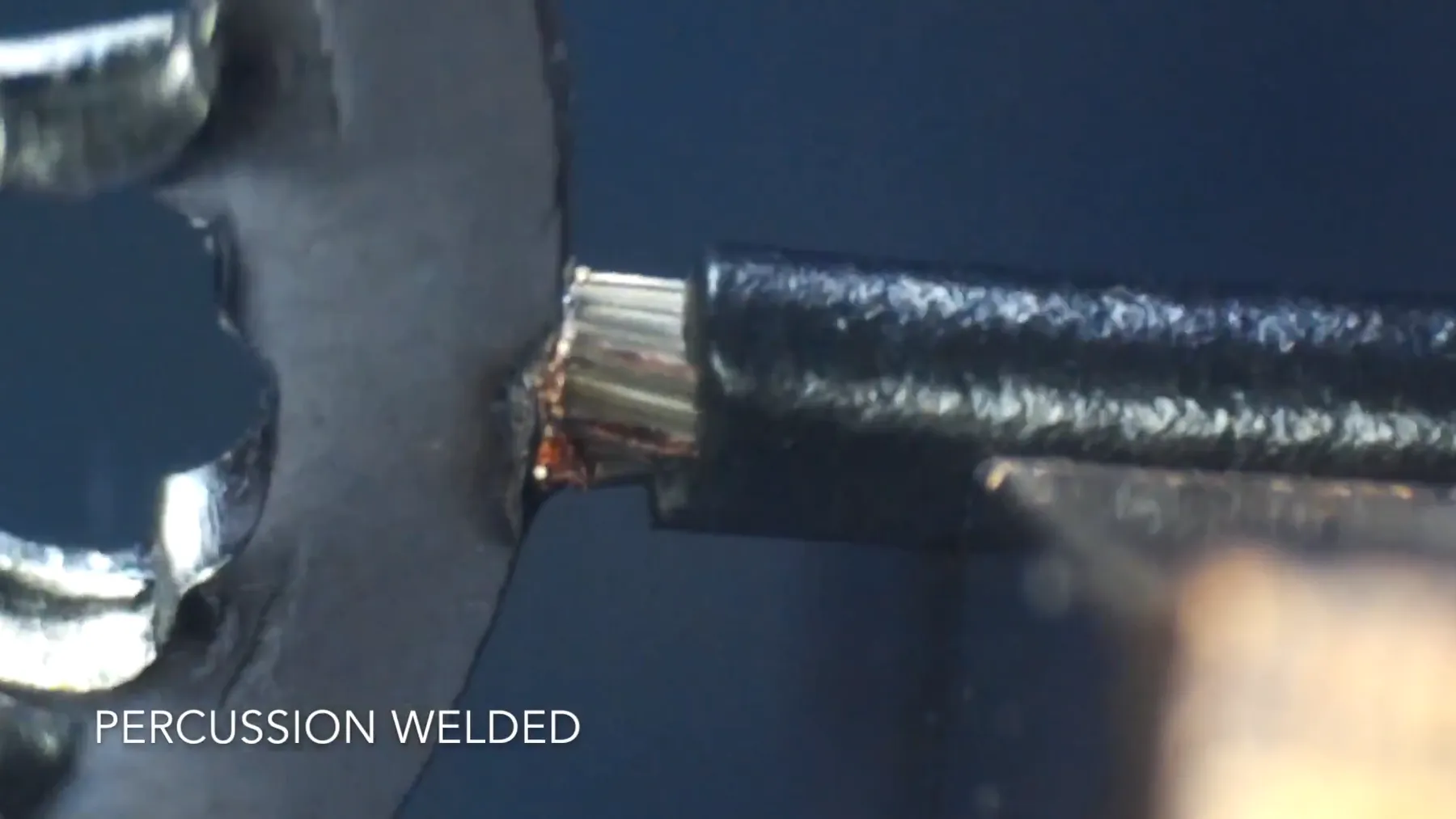
Magnified and bench views of welds.

Chapter 03 / 08
Medical devices
In the medical industry, the precision and reliability of welding are paramount. Percussion Welder creates strong, clean welds for medical devices, and our technology is used for medical components that require precise connections.
Medical devices are often small and intricate, made of dissimilar materials and complex components that need low resistance and high reliability. The process produces a minimal heat-affected zone and needs no filler, flux or solder. Ask us about your specific requirement, and see medical device welding.
Chapter 04 / 08
Electronics
Joining components like resistors, diodes and sensors can be challenging because they need low resistance and high reliability, and they often include heat-sensitive parts. Percussion Welder is used in electronics design and manufacturing, providing clean welds for dissimilar materials.
The weld joint has low or non-detectable electrical resistance, and the heating lasts only milliseconds, so the effect on surrounding material is minimal. See electronics welding.
Chapter 05 / 08
Sensors and thermocouples
Manufacturers use sensors in everything from appliances and automotive to medical devices. Sensors pose specific challenges that Percussion Welder addresses by creating strong, reliable, low-resistance welds between dissimilar metals without consumable materials like solder or flux.
The same approach joins thermocouple wire. You set the gap, weld energy and timing, and the system forms a butt weld without filler, solder or crimping. The 858 welds thermocouple wire of Types K, J, T, E, N, R, S and B, as well as exotic thermocouple alloys. See thermocouple welding.
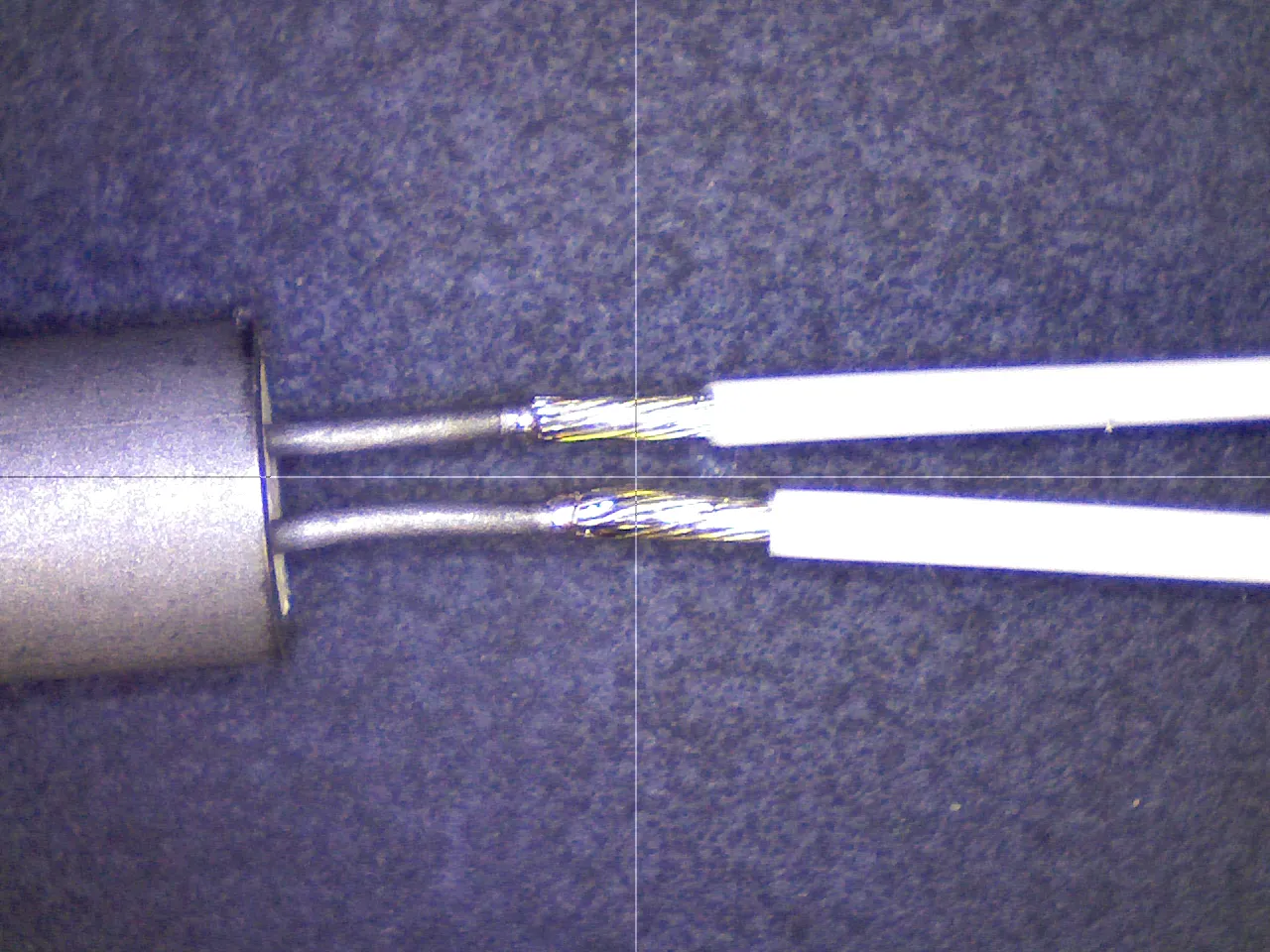
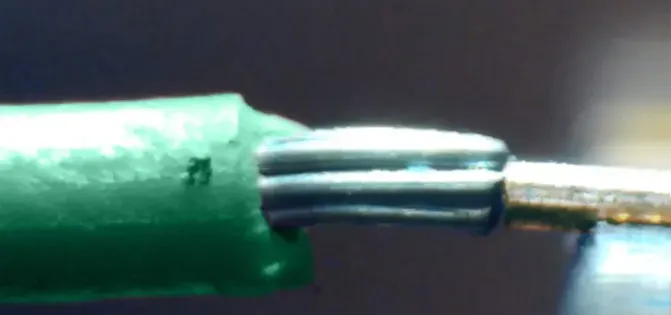
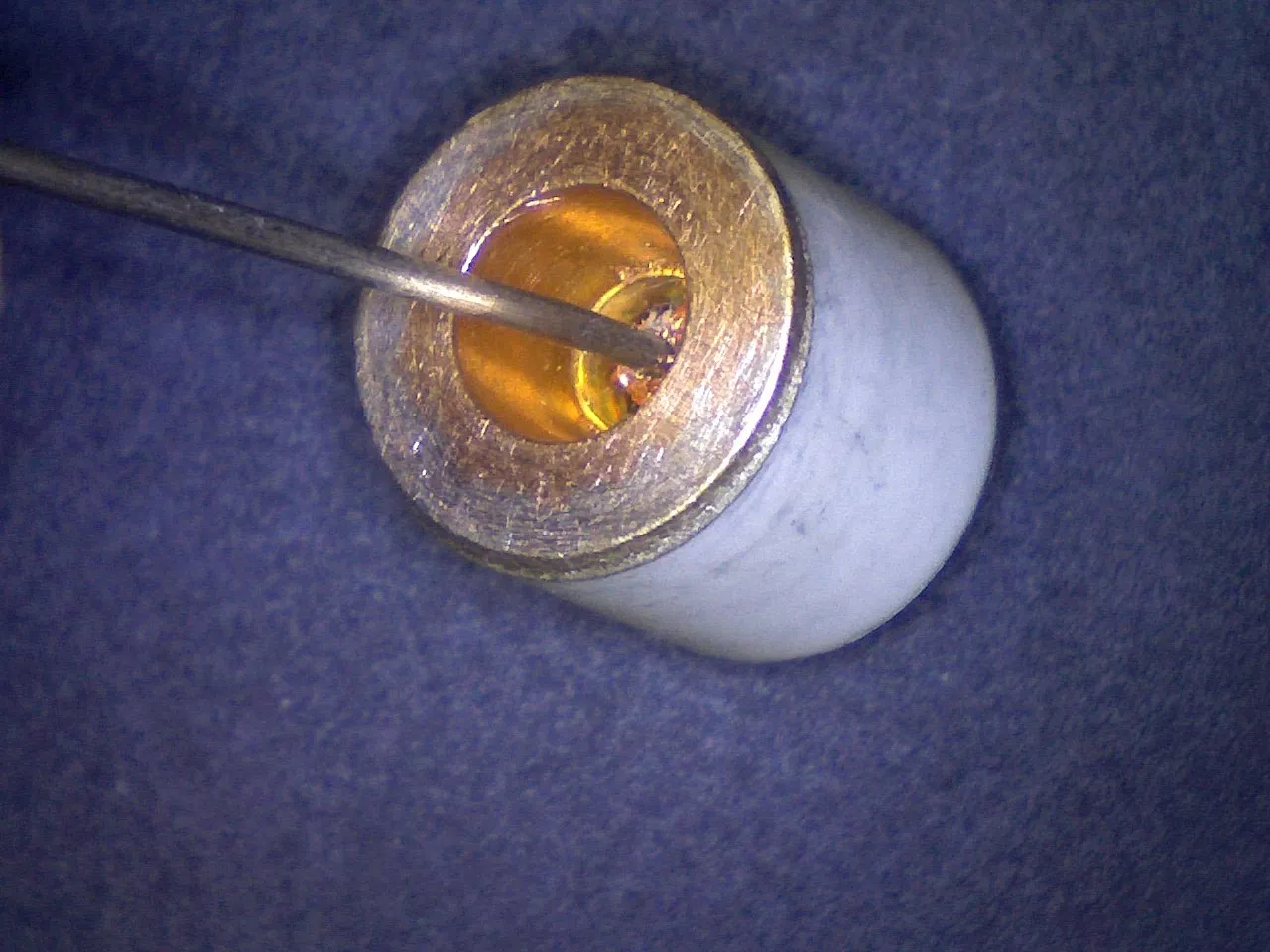
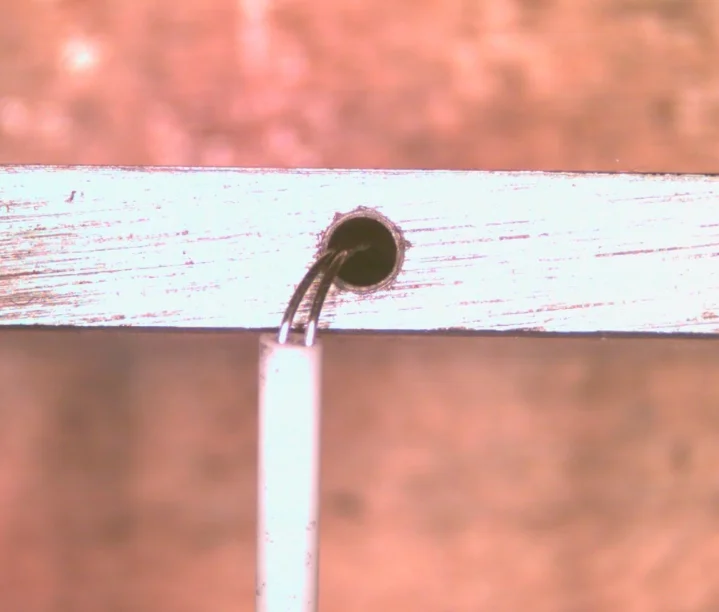 Type K thermocouple wires welded at the bottom of a 1/16" hole in a stainless steel plate
Want to see it on your parts?
Send samples and we'll run test welds before you commit.
Chapter 06 / 08
Aerospace, defense and other uses
Percussion Welder supports aerospace and defense customers. These programs often carry specific requirements, so ask us about your specific requirement. Many of our customers are under non-disclosure agreements, so we do not publish customer names.
Other uses on our site include heater elements and lighting fixtures, where similar or dissimilar metals are joined as butt welds without filler. See aerospace, defense, heater elements and lighting.
Chapter 07 / 08
Production and quality control
Percussion Welder completes welds in milliseconds and can be used for manual welding or integrated into automated production, in automation and semi-automation.
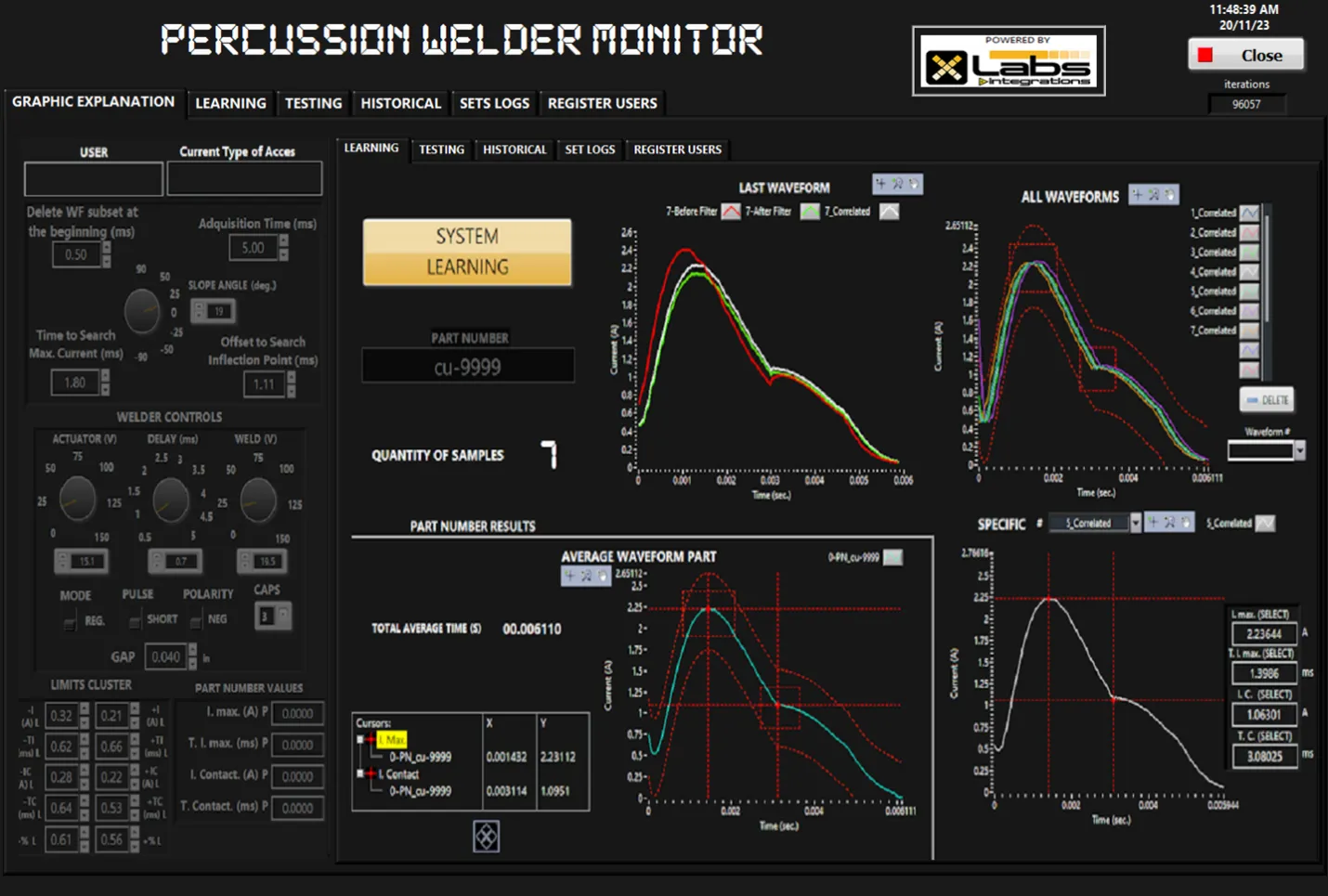
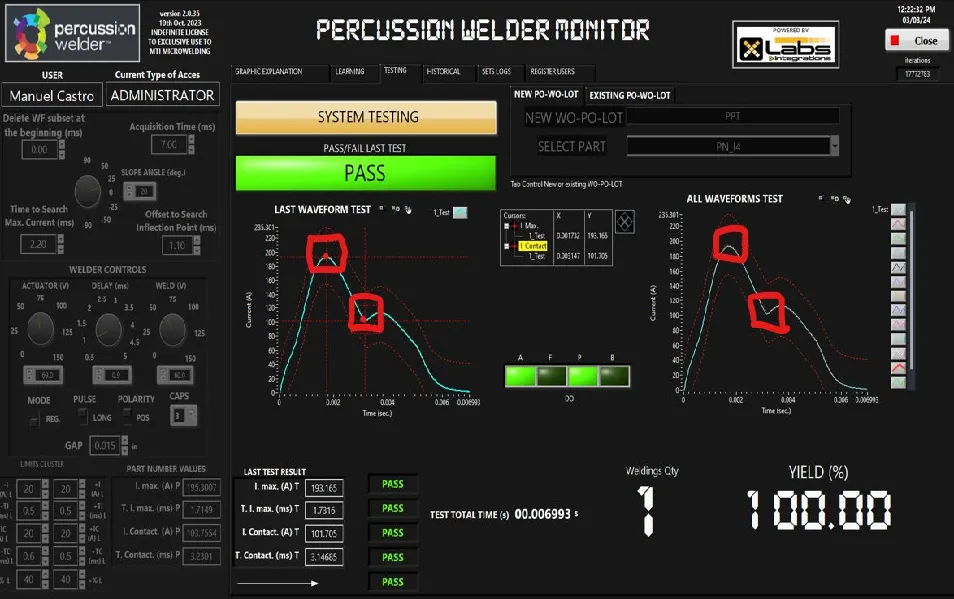
For quality control, the optional Percussion Weld Monitor compares each weld against a learned signature waveform and shows a Pass or Fail result.
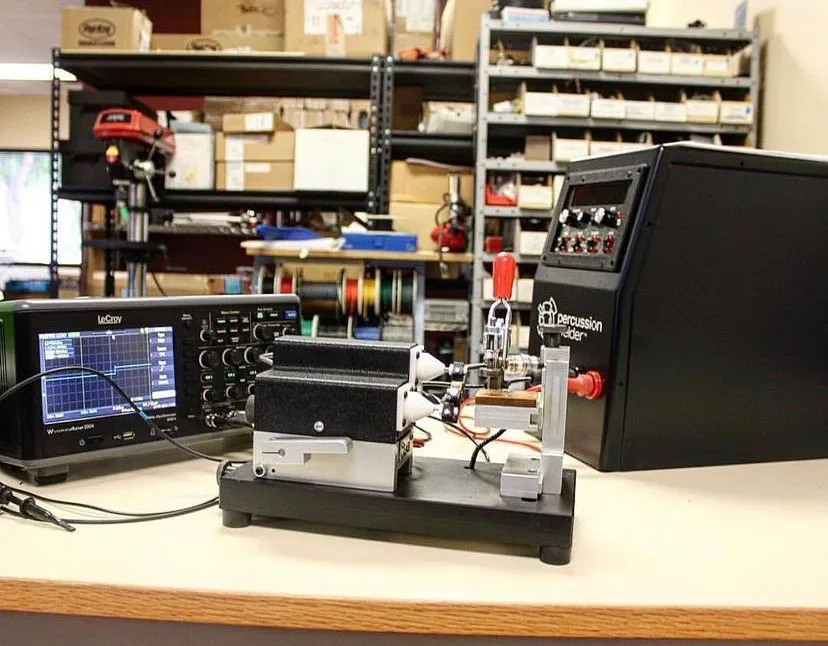
The welder gives precise control for intricate welds, made without filler material. Parameters are set on the 858, and weld parameters can be documented for your process. See our services for process development and training.
Chapter 08 / 08
Bring us your micro-welding challenge
Bring us your biggest micro-welding challenge and we can show you how Percussion Welder can help with performance, design and efficiency. Free applications tests of your materials are available, and we can run live, in-person tests at our lab at 7100 N Broadway, Denver.
Call 303-536-7838 or email sales@percussionwelder.com. You can also see the differences from other joining methods and our design help.
Where to next
Industries We Serve
Percussion welding joins dissimilar metals for medical, automotive, electronics, aerospace and defense, plus batteries, thermocouples and heater elements.
Open →Design
Design with percussion welding: fine wires and small joint surfaces, dissimilar metals, and welds that take milliseconds. Joint types, fixturing and validation.
Open →Percussion Weld Monitor
The Percussion Weld Monitor learns a signature waveform for your product, then tests production welds against it with pass/fail output and QC data.
Open →Why It’s Different
Percussion welding joins dissimilar metals in milliseconds with no filler, solder or flux and a minimal heat-affected zone. See what is different, and test it.
Open →FAQ
Which industries use percussion welding?
We support medical device, automotive, electronics, aerospace and defense customers, including batteries, sensors, thermocouples, heater elements and lighting. See the <a href="/industries/">industries</a> page.
Why is battery joining a problem for other methods?
One of the biggest challenges in battery design is joining dissimilar metals, which often forces design changes and inefficient workarounds. Percussion welding joins them without filler material.
What does it offer for electronics?
Components such as resistors, diodes and sensors need low resistance, high reliability and tolerance of heat-sensitive parts. Percussion welding gives clean welds between dissimilar materials in those cases.
Is solder or flux needed for sensors?
No. Percussion welding makes strong, reliable, low-resistance welds between dissimilar metals without consumables such as solder or flux.
How are welds checked in production?
The optional Percussion Weld Monitor compares each weld against a learned signature waveform and shows a Pass or Fail result.
Can you help with my design?
Yes. Bring your toughest micro-welding challenge and the team will show how percussion welding can help with performance, design and efficiency. You can also call 303-536-7838.
Still have a question? Tell us your weld challenge and an engineer will reply.
Start here
The MTI MicroWelding team can offer guidance, answer questions and run live tests.
Prefer to talk? Book a demo or call 303-536-7838