
Why percussion
Milliseconds
heating and weld action
No filler
no solder, no flux
Dissimilar
metals joined directly
131 schedules
lab-tested, 33 materials
Slow motion: 22 AWG bare copper wire percussion welded to a 0.100" thick aluminum lid.
Dissimilar metals
The melting-point gap
Joining metals that melt at very different temperatures is where conventional welding struggles. Choose two metals to see the gap.
Melting points are handbook values for the pure metals, rounded. Alloys melt over a range and differ from the pure metal.
The process
How a percussion weld happens
Four steps, in the order the machine performs them. Press a step, or let it play.
Schematic, not to scale. The pulse trace is illustrative and is not a measured waveform.
Chapter 01 / 07
No filler, solder or flux
In a percussion weld the joint is made of the two parts and nothing else. No filler metal, no solder and no flux is added, so there is nothing to select, apply or clean off, and no second material in the joint that can change how it behaves.
The process also has no electrodes to wear out and no consumables to purchase. That keeps material waste down, and it is why the same weld can be repeated part after part with only the parameters to manage.
This is the first thing to separate percussion welding from crimping and soldering: it makes a metallic bond between the parts themselves.
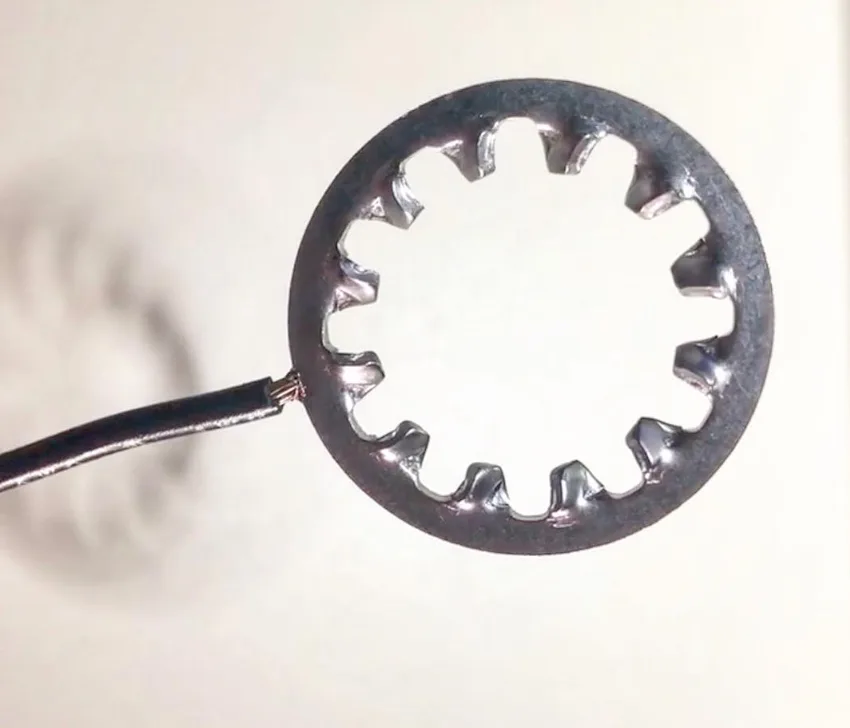 Wire percussion welded to a lock washer
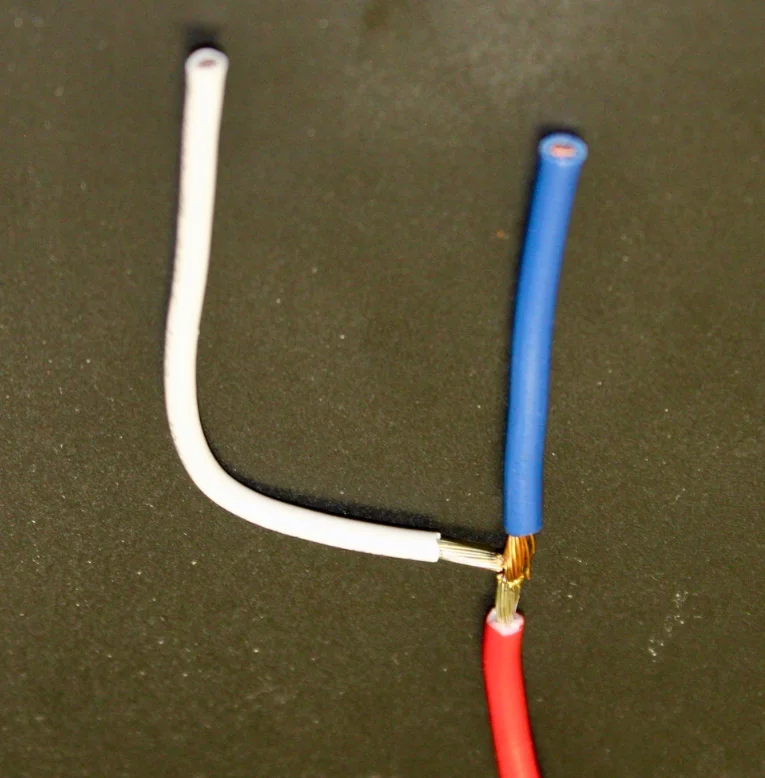 Three wires joined at one point
Chapter 02 / 07
Heat for milliseconds, not seconds
Percussion welding heats only the surfaces that are being joined. An electrical arc melts them, they are thrust together while molten, and the bond forms within milliseconds. The heating time is short enough that little heat spreads into the surrounding metal.
That is why the heat-affected zone (HAZ) is minimal, with little or no negative effect on the materials. It allows welding on small components, fine wires and heat-sensitive assemblies where the area around the joint has to stay unchanged.
The melting-gap diagram on this page shows the idea. To see how far heat spreads for different metals and heating times, use the HAZ calculator.
Want to see it on your parts?
Send samples and we'll run test welds before you commit.
Gallery
What a fast weld looks like
Welds from our bench in Denver.

Chapter 03 / 07
Dissimilar metals, joined directly
Many pairs of metals are difficult to join because they melt at different temperatures or do not alloy well. Percussion welding melts only the faying surfaces for a moment and forges them together, so two different metals can be joined directly, with no third metal between them.
Our lab weld-schedule database holds 131 schedules across 33 materials and 68 material pairs, from copper to stainless steel to tungsten to nickel. Check your pair in the material compatibility checker, get starting parameters in the Parameter Finder, or read the full guide to dissimilar metal welding.
If your pair is not in the data, we say so and offer a test instead of guessing.
Chapter 04 / 07
Low electrical resistance across the joint
Because the weld is made without filler or solder, there is no foreign material between the two parts to add resistance. The result is a joint with low electrical resistance, which matters for leads, terminals, thermocouples, sensors and battery connections where the weld is part of the circuit.
We do not quote a resistance value for percussion welds in general. It depends on the metals, the cross-section and the parameters, so measure it on your own parts and tell us the requirement.
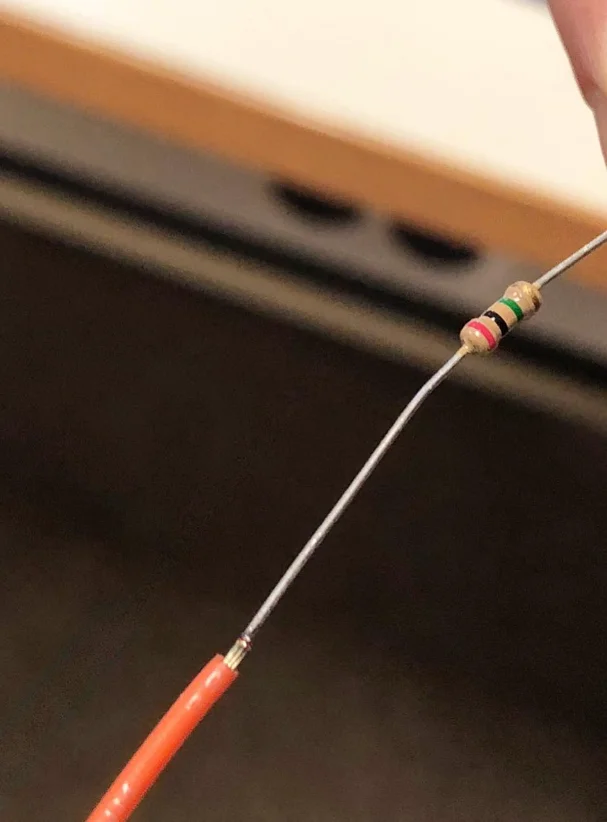 A resistor lead welded to a wire
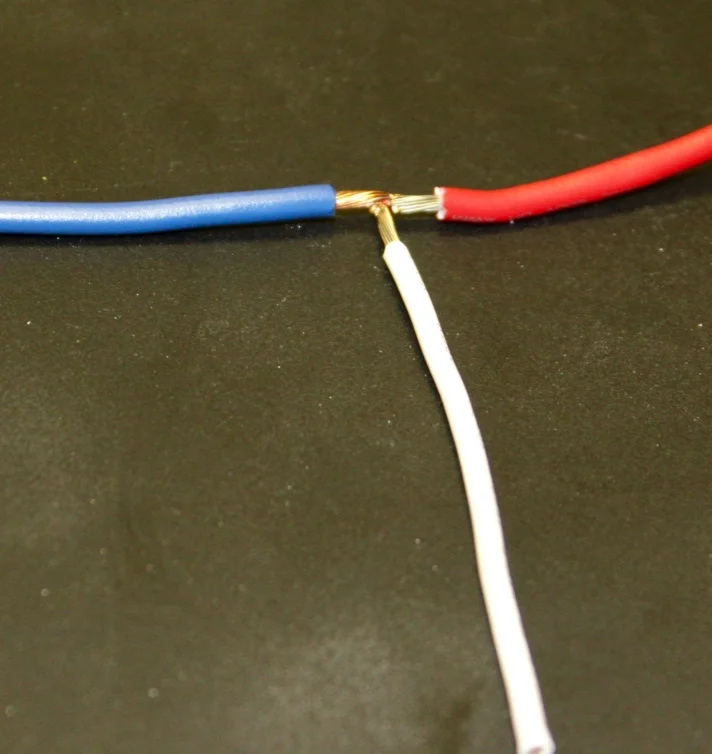 Three-wire junction, side view
Chapter 05 / 07
Repeatable with the 858, the 726 and the monitor
Repeatability comes from controlling the few things that matter and being able to check each weld. The system is built around three products:
- Model 858 Percussion Welder: the power supply and controller. Actuator speed, delay and weld energy are set on dials, with switches for mode, pulse, polarity and capacitance, so a working setting can be written down and set again.
- Model 726 Bench Fixture: holds the wire and the workpiece, with adjustment for position and gap, so the pre-defined gap is the same every time.
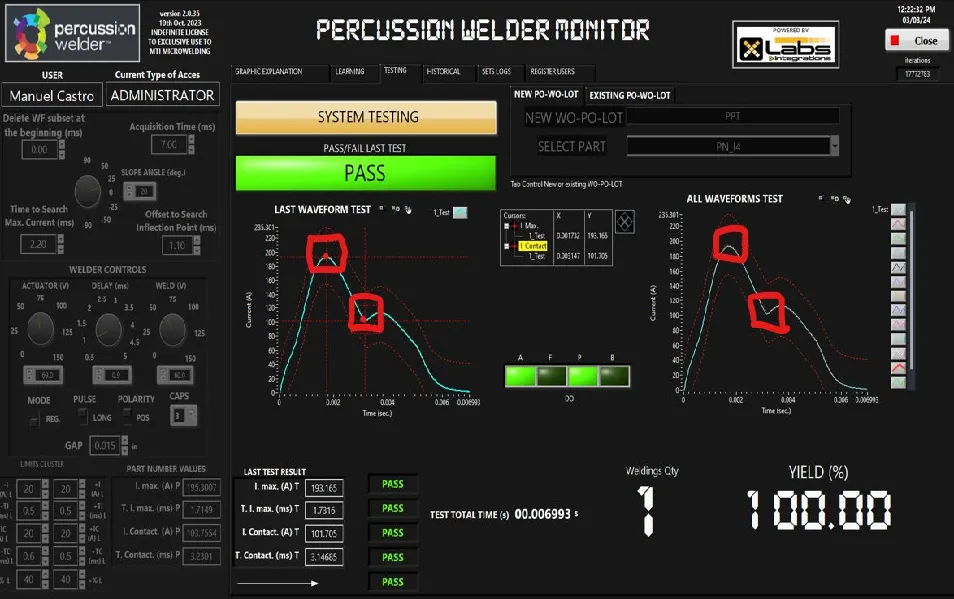
- Percussion Weld Monitor: an optional tool that learns a signature waveform from good welds and compares each later weld with it, with a Pass/Fail result.
See the 858, the 726 and the Percussion Weld Monitor for details.
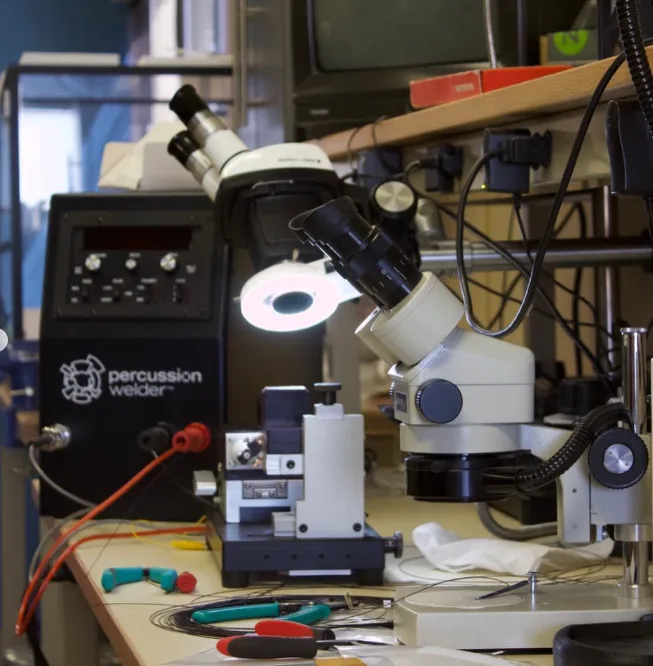 The 858 and bench fixture at a microscope station
Want to see it on your parts?
Send samples and we'll run test welds before you commit.
Chapter 06 / 07
Joints that hold up
Percussion welds resist shock and vibration. In pull tests the wire often breaks before the weld, which shows the weld held while the wire itself gave way.
We show these tests on the bench rather than describe them: the videos on this page include pull tests of copper wire welded to stainless steel and of copper-clad steel wire. Results depend on materials and parameters, so we recommend validating joint strength on your own parts before production, changing one setting at a time as you tune.
Chapter 07 / 07
Where it fits, and how to find out
Percussion welding is for small parts: fine wires, leads, pins and thin sections, in medical device, automotive, electronics, aerospace and defense work and in batteries, thermocouples, heater elements and lighting. It is not the answer to every joint, and we will tell you plainly when it is not.
The fastest way to know is to see your parts welded. Free applications tests of your materials are available, and we can run live, in-person tests at our lab in Denver. Bring your most challenging current project, or send the materials, and we will show you what the process does with them.
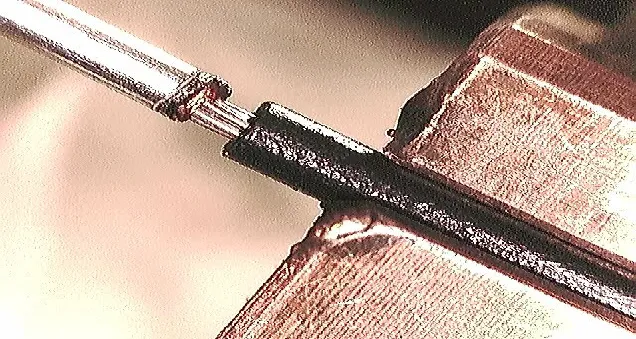
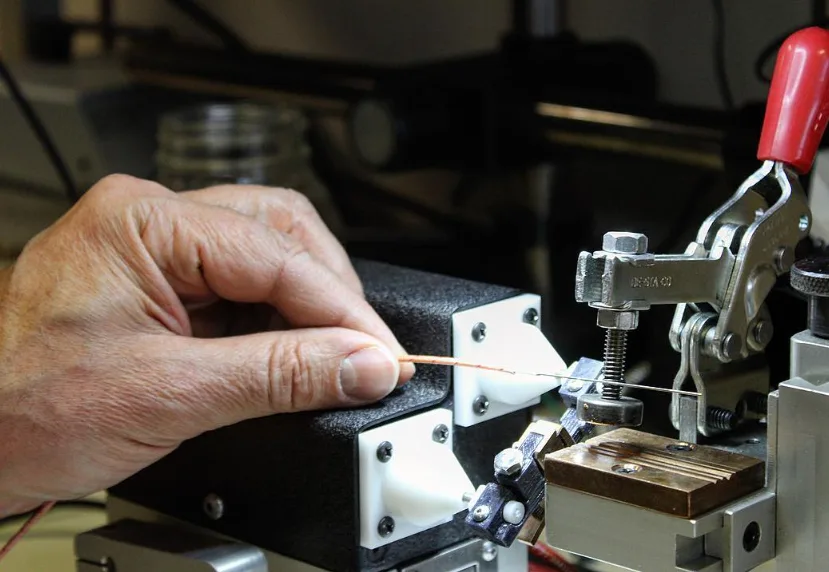 Loading a wire into the fixture
FAQ
What makes percussion welding different from soldering or conventional welding?
A percussion weld is made by a capacitor-discharge arc between two parts at a pre-defined gap. The surfaces become molten, are thrust together, and bond within milliseconds. There is no solder, flux or filler metal in the joint, and the heat-affected zone is minimal.
Does percussion welding use filler metal, solder or flux?
No. The joint is made from the two parts alone. The process also has no electrodes to wear out and no consumables to purchase.
Can it join two different metals?
Yes. Joining dissimilar metals directly is one of its main uses. Our lab database covers 68 material pairs, and the material compatibility checker shows whether yours is in it. If it is not, we can test your materials for free.
How strong are percussion welds?
The welds resist shock and vibration, and in pull tests the wire often breaks before the weld does. Strength depends on the materials and the parameters, so we recommend validating joint strength on your own parts before production.
Is the weld electrically conductive?
Yes. Because no filler or solder sits between the parts, the weld has low electrical resistance. We do not publish a resistance figure, because it depends on your materials and geometry.
Can I try it on my own parts?
Yes. Free applications tests of your materials are available, and we can run live, in-person tests at our lab in Denver. Call 303-536-7838 or email sales@percussionwelder.com.
Still have a question? Tell us your weld challenge and an engineer will reply.
Start here
Bring your most challenging joining project, or send the materials. Free applications tests of your materials are available, and we can run live, in-person tests at our lab in Denver.
Prefer to talk? Book a demo or call 303-536-7838