
Wire joining
3
joint types: wire to wire, wire to pin, pin to pin
Stranded
to stranded or solid wire
Low
or non-detectable resistance across the joint
Minimal
heat-affected zone
Why square cuts matter
How an uneven cut makes a weak weld
The wire and the pin start aligned. An angled cut on the pin touches first at one edge, and the wire rides across it.
Schematic, not to scale. After MTI's pin/wire welding practice aid.
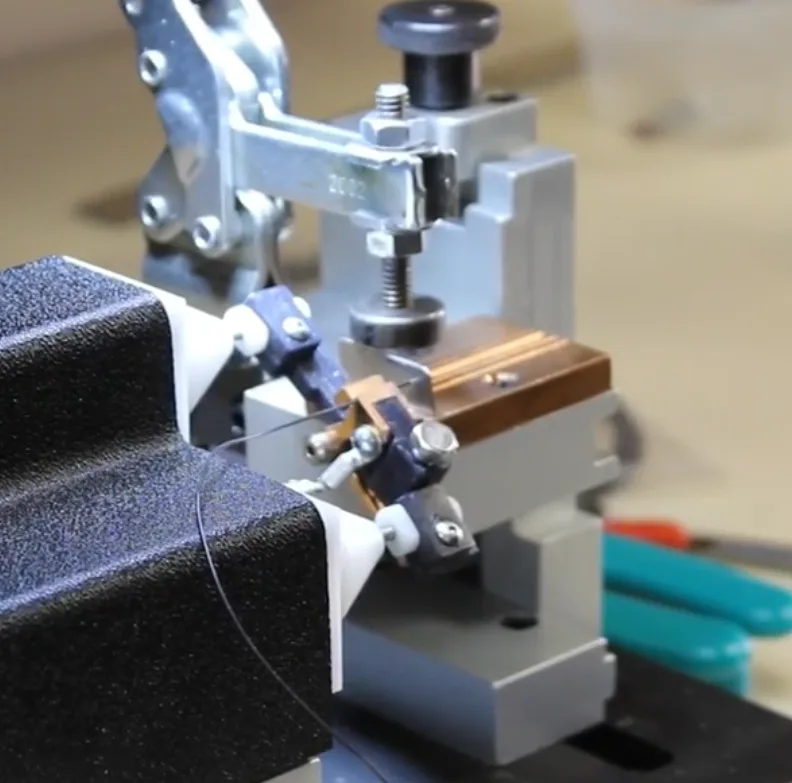 Fine wire in the fixture
Chapter 01 / 07
Butt welding wire and pins
Butt welding joins two pieces of wire or pins end to end. Percussion welding is one method for butt welding, and it is used for wire to wire, wire to pin and pin to pin welds.
The process uses a rapid heat source and rapid movement to fuse the two pieces into a clean weld. It needs no solder, filler or flux, and it leaves a minimal heat-affected zone because the heating lasts only milliseconds.
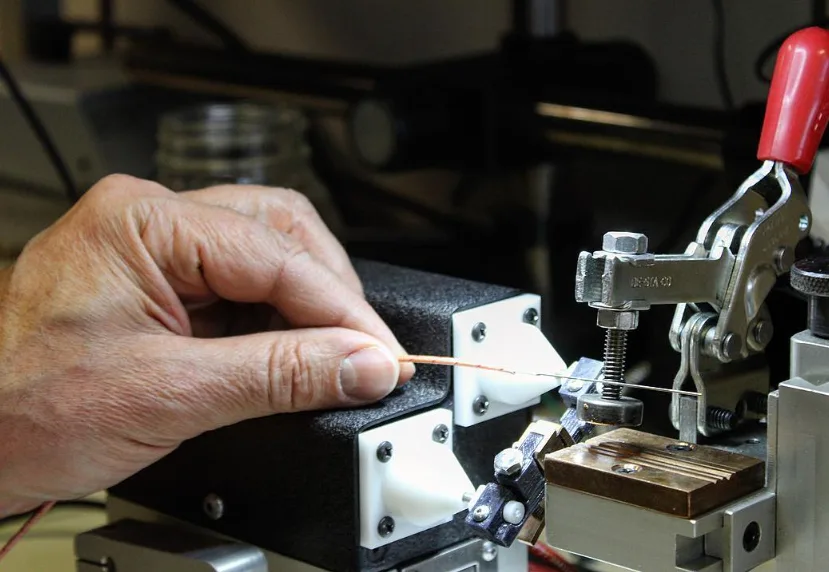 Loading a wire into the fixture
Chapter 02 / 07
Wire to wire, wire to pin and pin to pin
Three joint types cover most wire work, and stranded wire is welded as readily as solid.
- Wire to wire: two lengths of wire joined end to end.
- Wire to pin: a wire joined to a pin.
- Pin to pin: two pins joined end to end.
- Stranded to stranded or solid: butt welding stranded wire to stranded wire or to solid wire.
Joining wires with low columnar strength is another typical application.
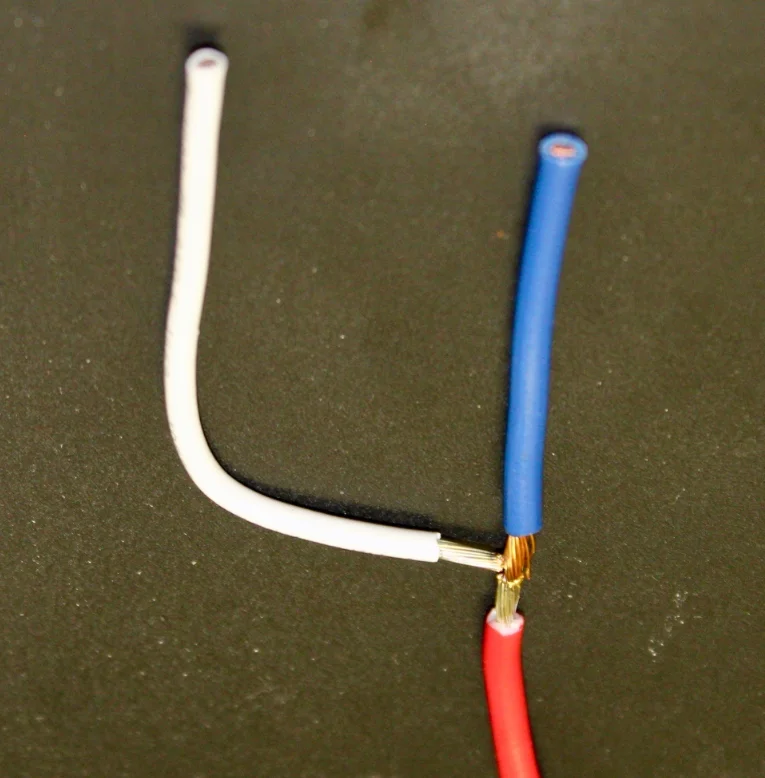 Three wires joined at one point
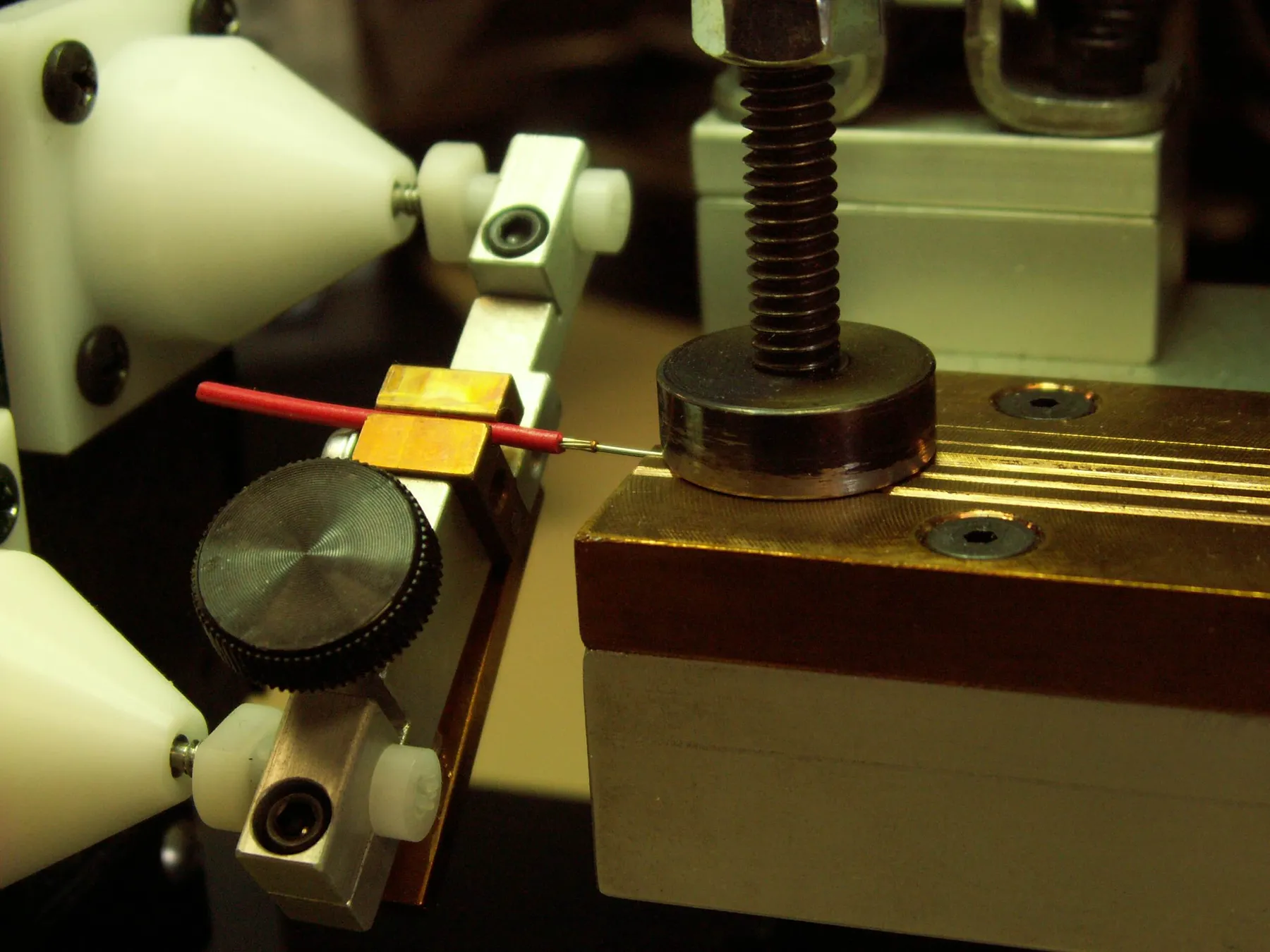
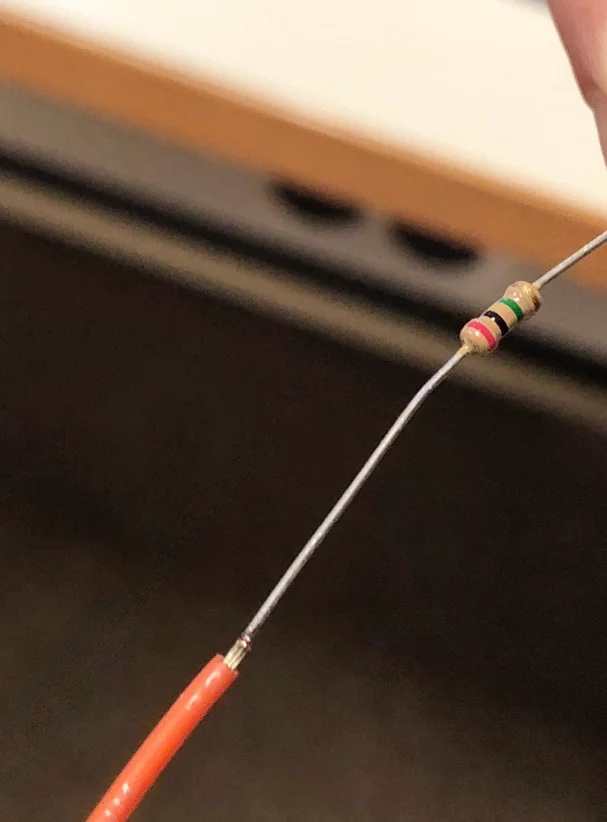 A resistor lead welded to a wire
Want to see it on your parts?
Send samples and we'll run test welds before you commit.
Gallery
Wire and pin joints
Magnified and bench views of wire welds.

Chapter 03 / 07
Dissimilar metals and small wire
Percussion welding is particularly useful for joining dissimilar metals such as steel, aluminum, copper and stainless steel, especially when the wire diameters are small. Our bench videos show these combinations, with their captions:
- 20 AWG soft aluminum wire percussion welded to 22 AWG tinned copper
- Slow motion: titanium wire butt weld
- Two strands of .034" Inconel joined together with the Percussion Welder
- 18 AWG stranded tinned copper wire percussion welded to 17 AWG copper clad steel, with a close-up of the weld
- Slow motion: 22 AWG bare copper wire percussion welded to a 0.100" thick aluminum lid
See dissimilar metal welding and the material compatibility checker.
Chapter 04 / 07
How a wire weld is made
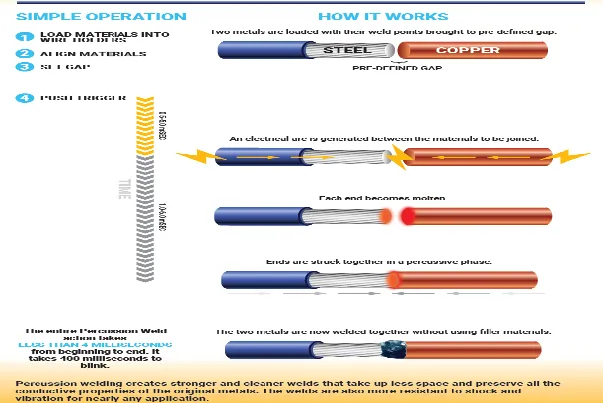
A wire weld follows four stages, finished within milliseconds:
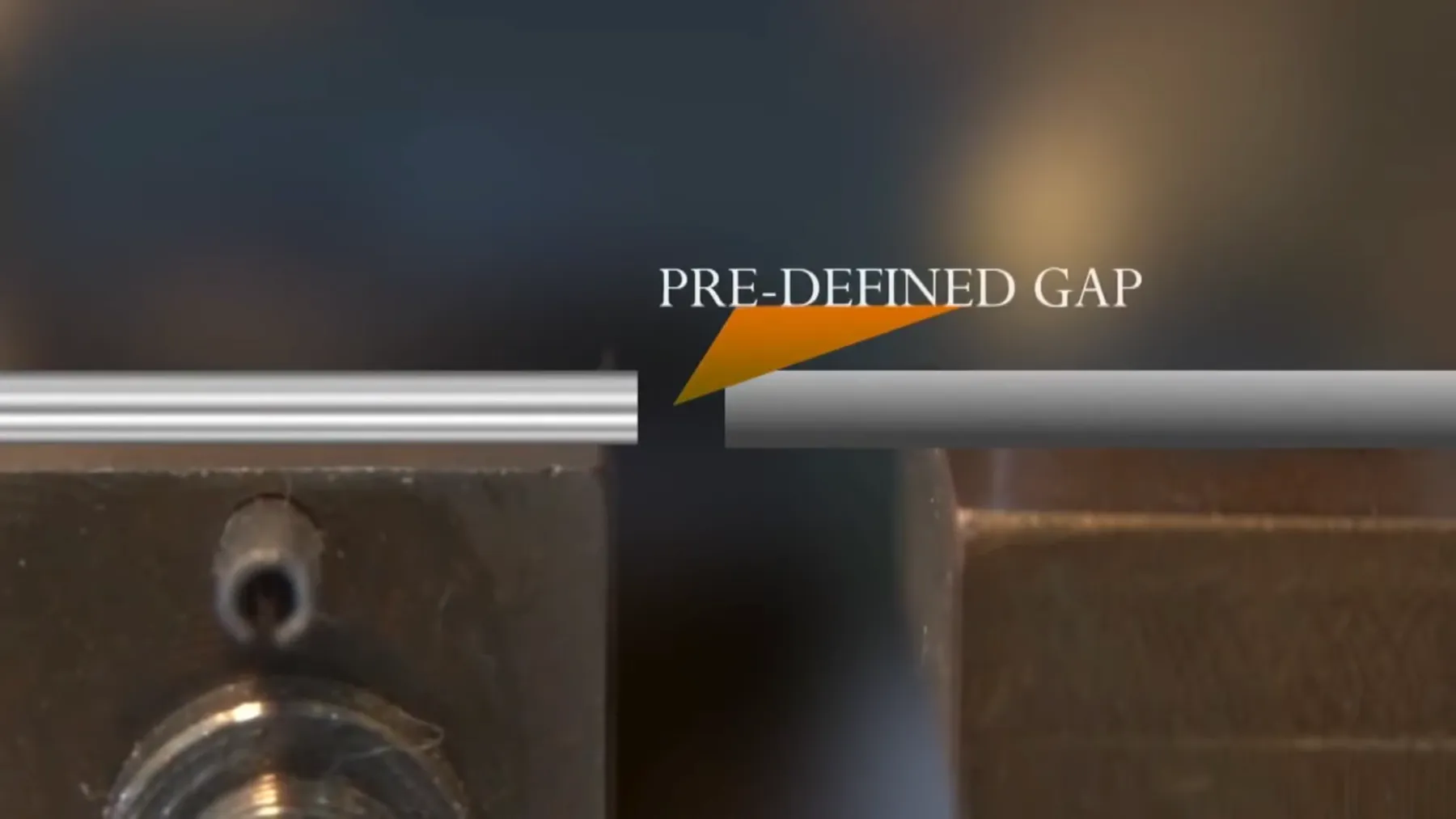
- The wire and its mate are loaded to a pre-defined gap.
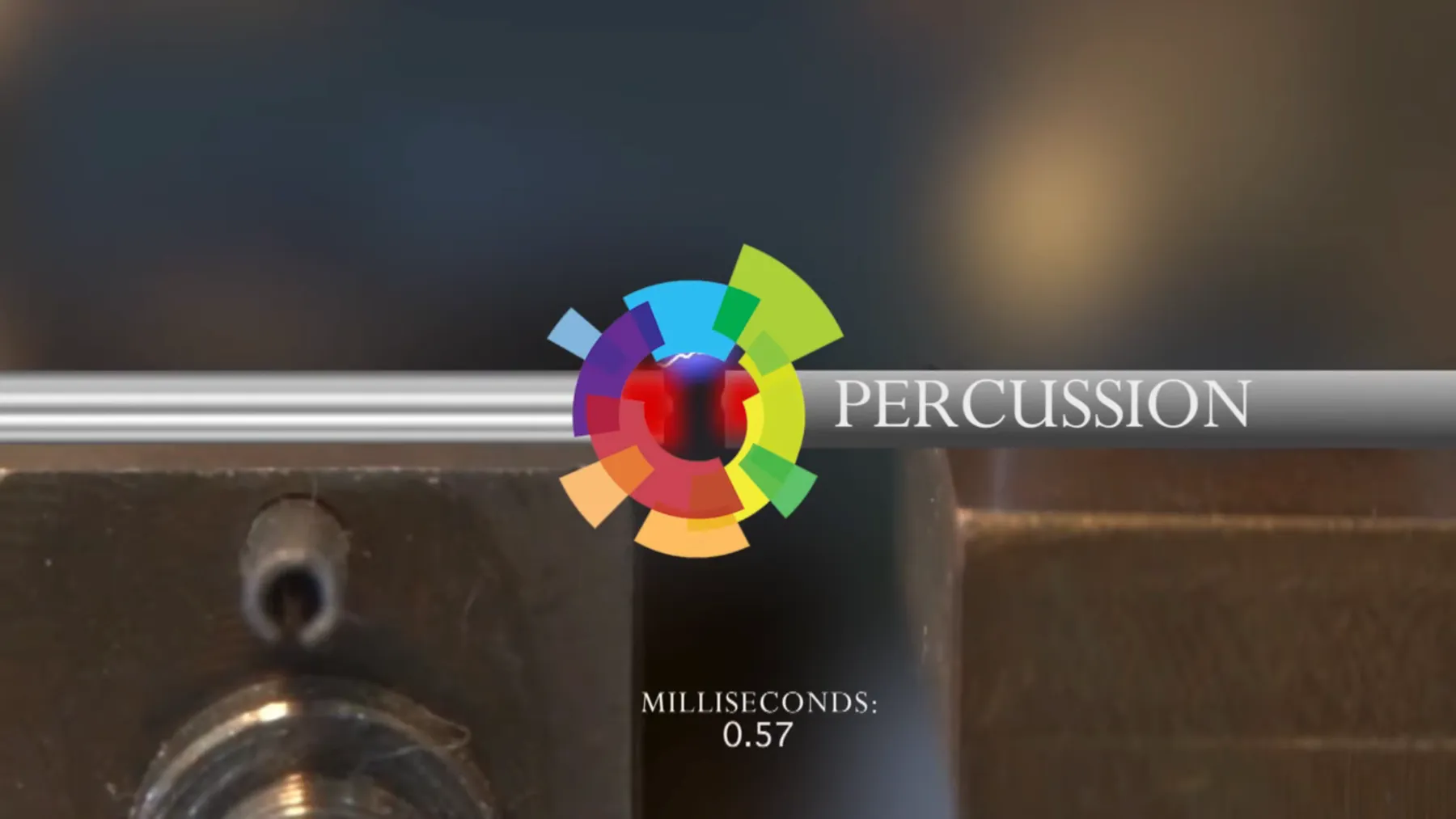
- A capacitor-discharge arc forms across the gap.
- The surfaces melt and the molten ends are thrust together in the percussive phase.
- The parts bond, with no filler, flux or solder.
Because the heating lasts only milliseconds, the effect on the metal around the joint is minimal.
Chapter 05 / 07
Setting the weld
The welding current can be adjusted to give the strength and quality the wire requires, so the process can be tailored to the wire in use. Parameters are set with the dials and switches on the 858 front panel.
The 726 bench fixture holds the pieces: a moveable wireholder with spring-loaded thrust and a stationary workpiece holder, with Z- and Y-axis adjustment. It is triggered with a foot pedal or hand switch.
For a starting point, our lab database holds 131 weld schedules across 33 materials and 68 material pairs, each recording wire diameter, actuator velocity, delay time, capacitance setting, weld voltage and pulse. They are starting points, not guarantees. Change one setting at a time and validate on your own wire.
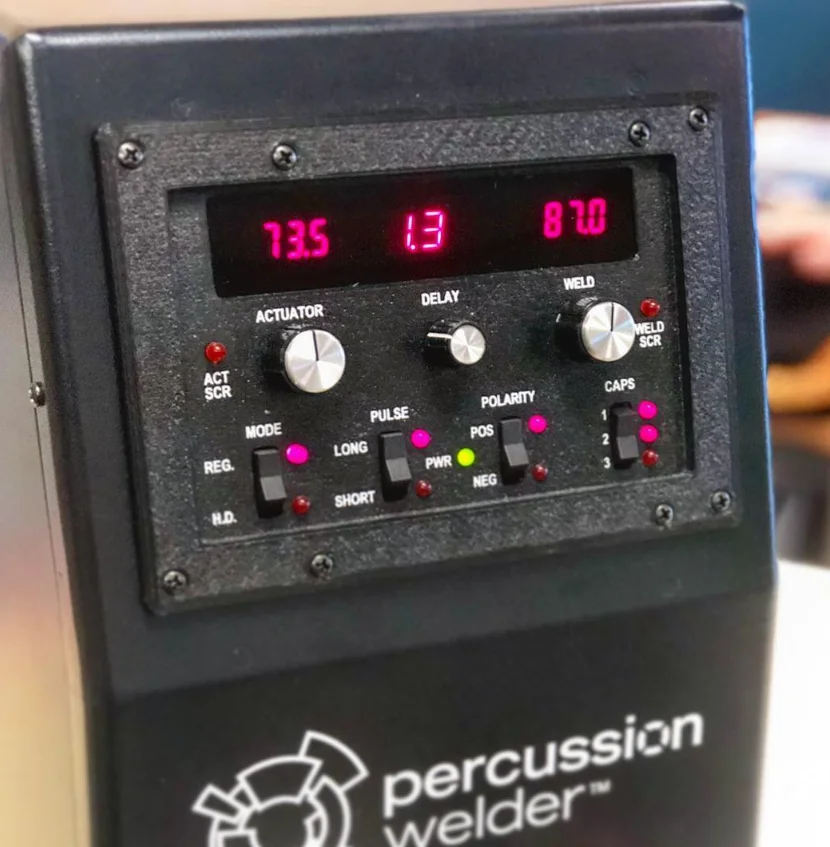 The 858 front panel
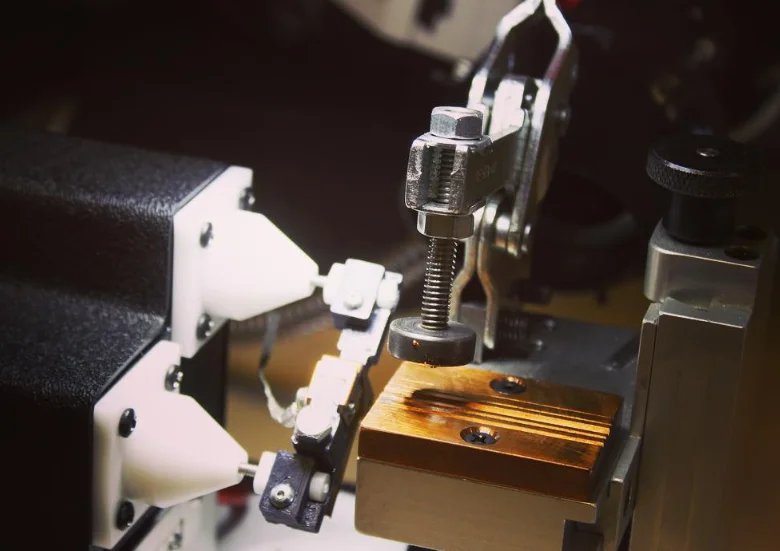 Cones, clamp and copper block
Want to see it on your parts?
Send samples and we'll run test welds before you commit.
Chapter 06 / 07
What the joint is like
The weld joint has low or non-detectable electrical resistance, so there is little or no drop in current flow. The joint has a minimal heat-affected zone and resists vibration.
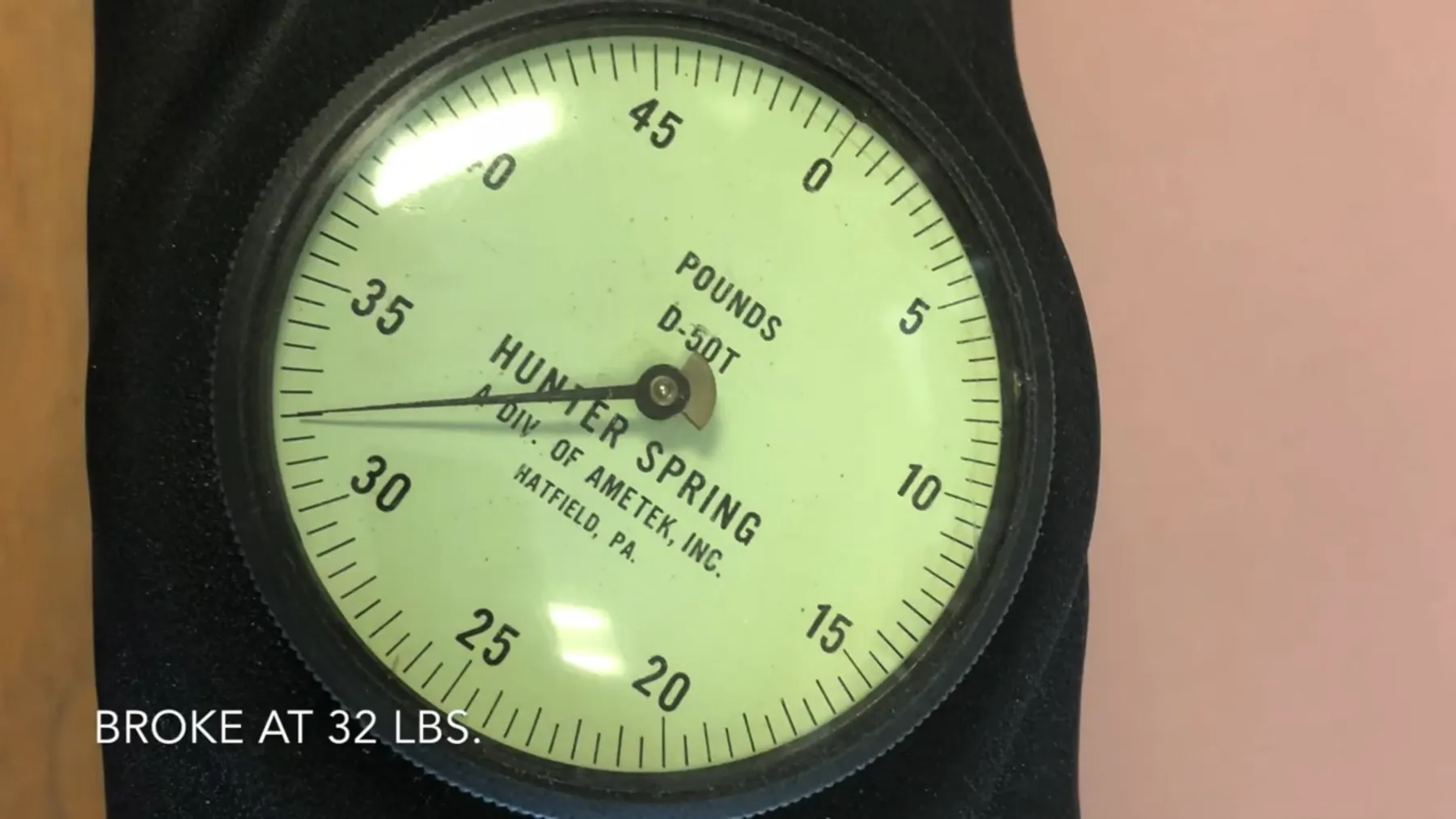
In pull tests the wire often breaks before the weld. Two bench videos show it:
- 20 AWG brass wire percussion welded to a .015" steel strip, followed by a pull test. The wire broke above the weld at 32 lbs
- 18 AWG stranded tinned copper wire welded to 17 AWG copper clad steel wire, then pulled to failure. Breaks at 46 lbs
These are individual samples, not a specification. Validate strength on your own parts.
Chapter 07 / 07
Checking and testing wire welds
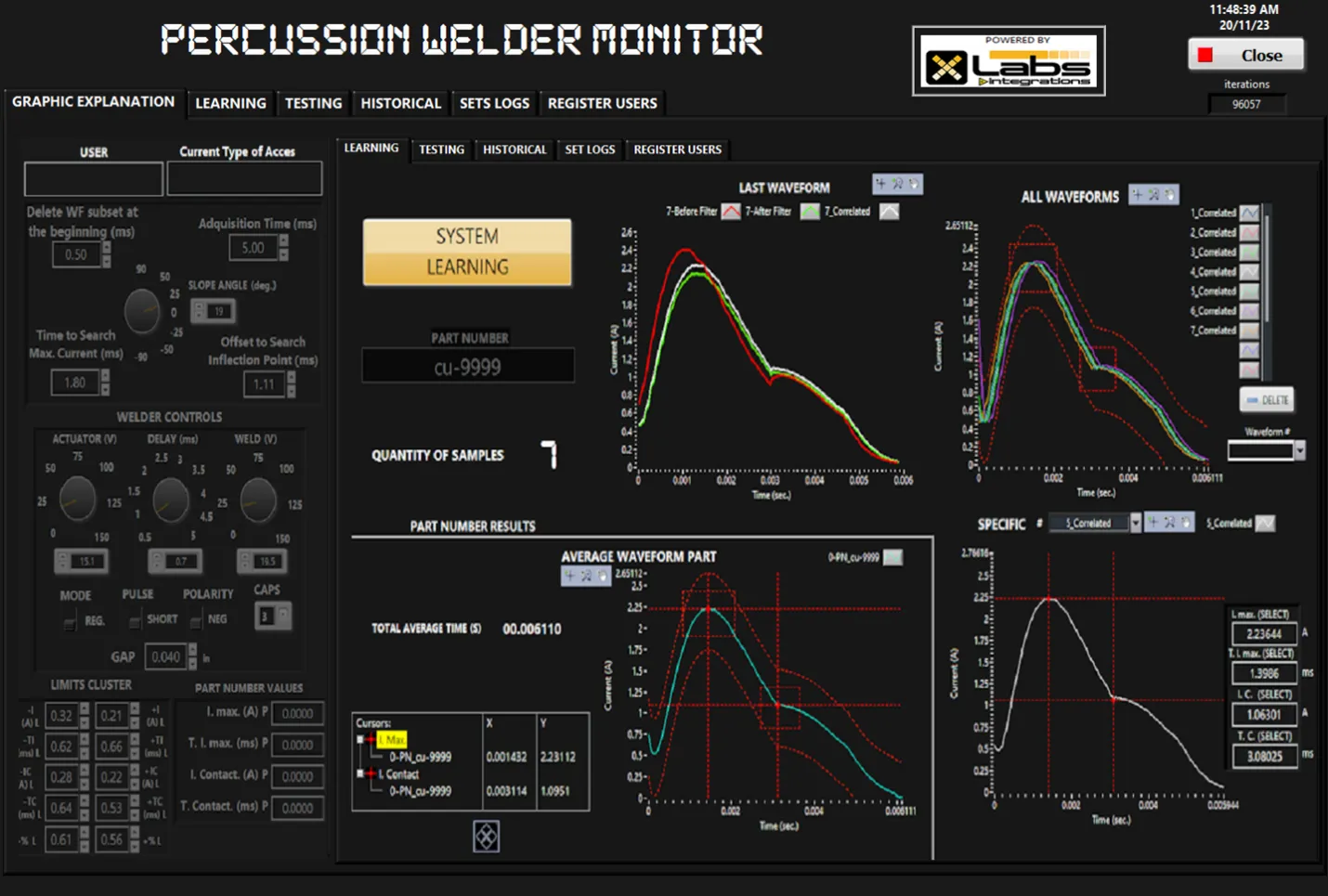
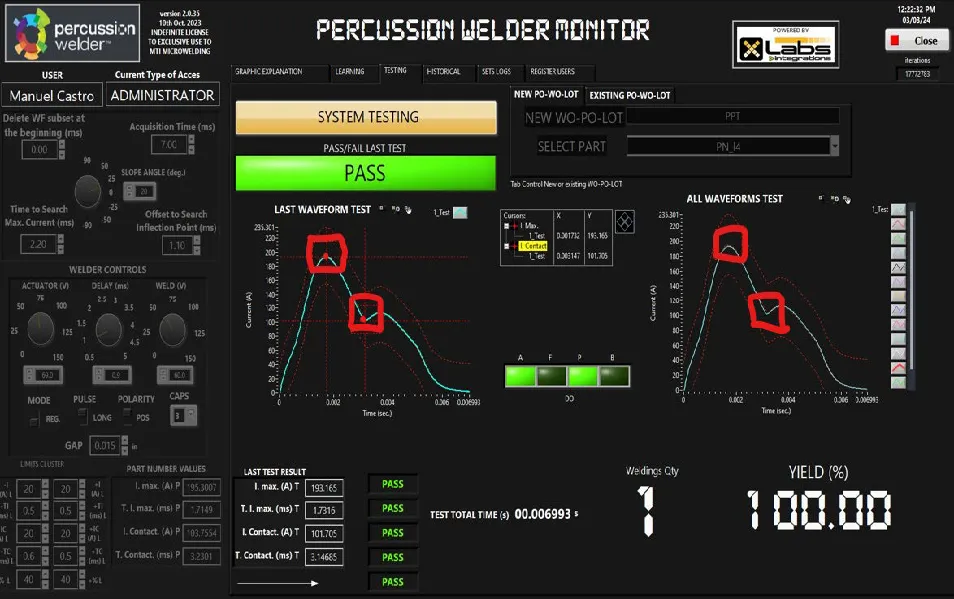
For production, the optional Percussion Weld Monitor builds a signature waveform in a Learning stage. In its Test stage it compares later welds against that signature and shows Pass or Fail.
To see your wire welded first, send us the materials. Free applications tests are available, and we can run live, in-person tests at our lab in Denver. Use the material list form or call 303-536-7838.
The video above is our step-by-step demonstration of welding two dissimilar metals together.
Where to next
858 Percussion Welder
The Model 858 is a capacitor discharge micro welder for thermocouple wire, fine wire and dissimilar metals. No filler, minimal HAZ. Call 303-536-7838.
Open →726 Bench Fixture
The Model 726 Bench Fixture is the weld head of the Percussion Welder system: it holds, aligns and thrusts small parts together, with the 858 and 808.
Open →Thermocouple
Percussion welding for thermocouples: butt welds on base-metal and noble-metal wire with no filler, solder or crimping, using controlled heat and pressure.
Open →Dissimilar Metal Welding
How to weld dissimilar metals: why melting-point gaps make it hard, how percussion welding joins copper, aluminum, steel and more with no filler, and our lab data.
Open →FAQ
What joints can it make?
Butt welds in wire to wire, wire to pin and pin to pin configurations. It also welds stranded wire to stranded or solid wire.
Which metals can be joined?
Steel, aluminum, copper and stainless steel, especially in small wire diameters and in dissimilar combinations. The bench videos also show brass, titanium and Inconel wire.
Will the weld change the electrical performance?
The joint has low or non-detectable resistance, so there is little or no drop in current flow.
How are the weld settings controlled?
The welding current can be adjusted to suit the strength and quality the wire requires. Parameters are set with the dials and switches on the 858 front panel.
How do the joints hold up to vibration?
Percussion weld joints have minimal heat-affected zones and resist vibration.
Can you tell me how my wire will weld?
Send us the materials and gauge. Free applications tests of your materials are available, and we can run live tests at our Denver lab. Our <a href="/weld-schedules/">weld schedules</a> are starting points, not guarantees.
Still have a question? Tell us your weld challenge and an engineer will reply.
Start here
Tell us the materials and gauge, and we will tell you how they weld.
Prefer to talk? Book a demo or call 303-536-7838